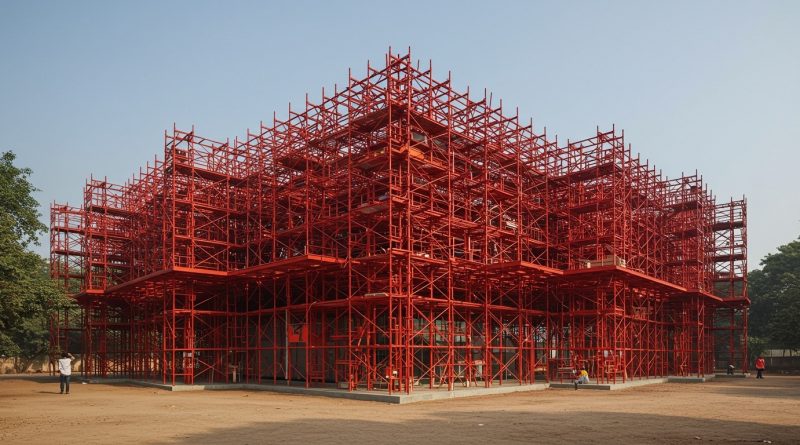
JHDD Architecture Report — 2026.08.06
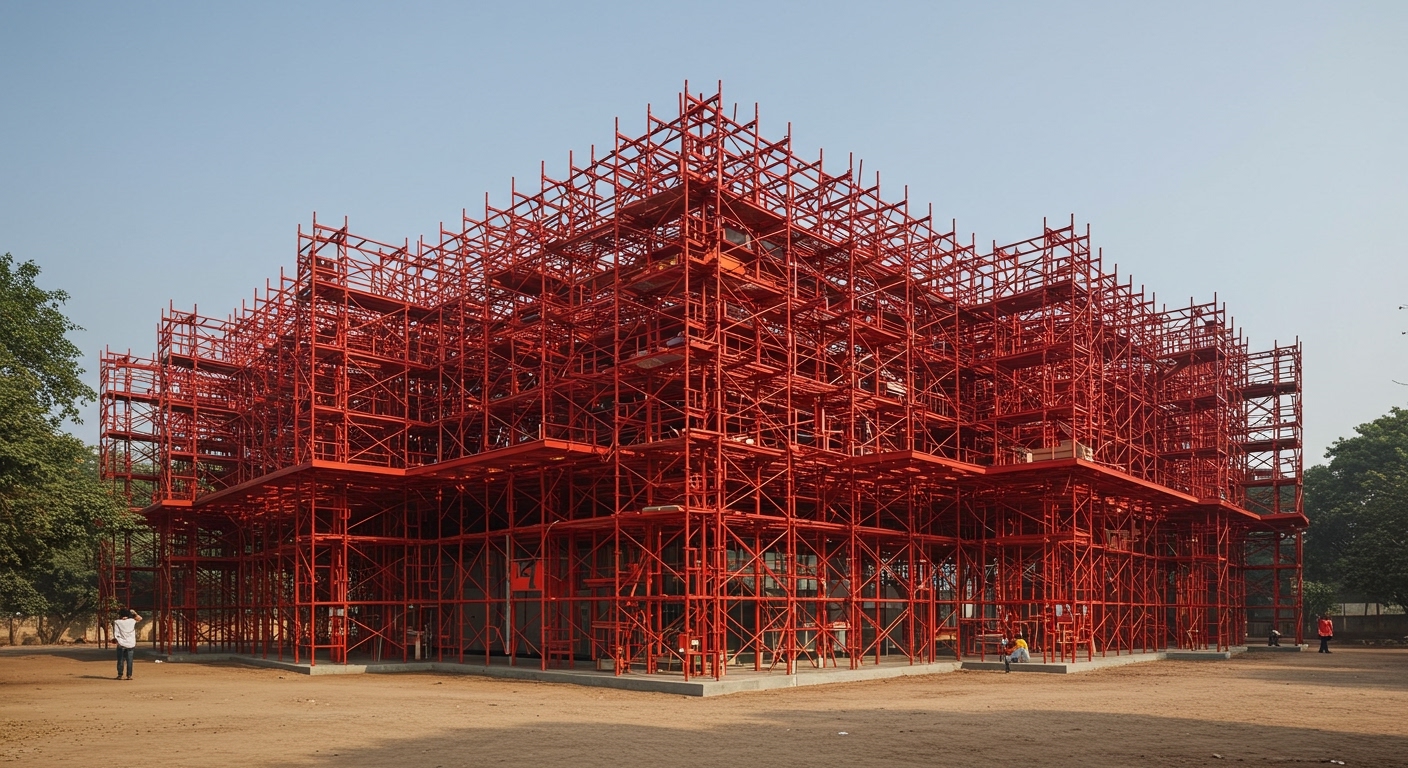
Kanan Modi Associates deployed red scaffolding as the primary structural element for The Reclaimed Pavilion in Hyderabad.
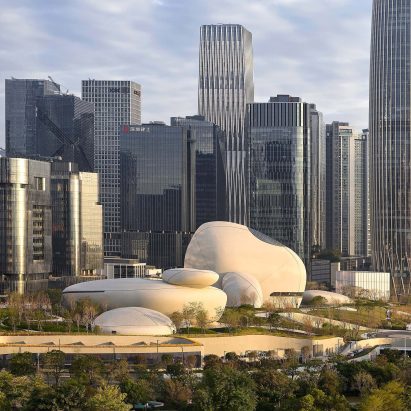
The common thread across recent developments is a re-evaluation of architecture’s intended longevity, its material sourcing, and its profound responsibility within existing urban environments. The Reclaimed Pavilion in India exemplifies how a temporary structure can address immediate public needs by utilizing salvaged construction waste, signaling a shift from linear to circular material flows. Simultaneously, MAD’s Shenzhen Bay Culture Square integrates sculptural forms and public amenities into a dense coastal district, suggesting a more seamless blending of built form with natural and civic spaces. The establishment of the TraMod AWARDS for “Interactions between Tradition & Modernity” and the explicit focus on “energy-efficient, low-carbon, climate-resilient” practices at the International Sustainable Building Competition at COP31 both underscore an increasing institutional emphasis on contextual responsibility and material efficiency, moving beyond purely aesthetic or singular programmatic concerns. These examples collectively illustrate a trajectory toward architecture that is less about static, monumental permanence and more about responsive, layered, and resource-aware intervention.
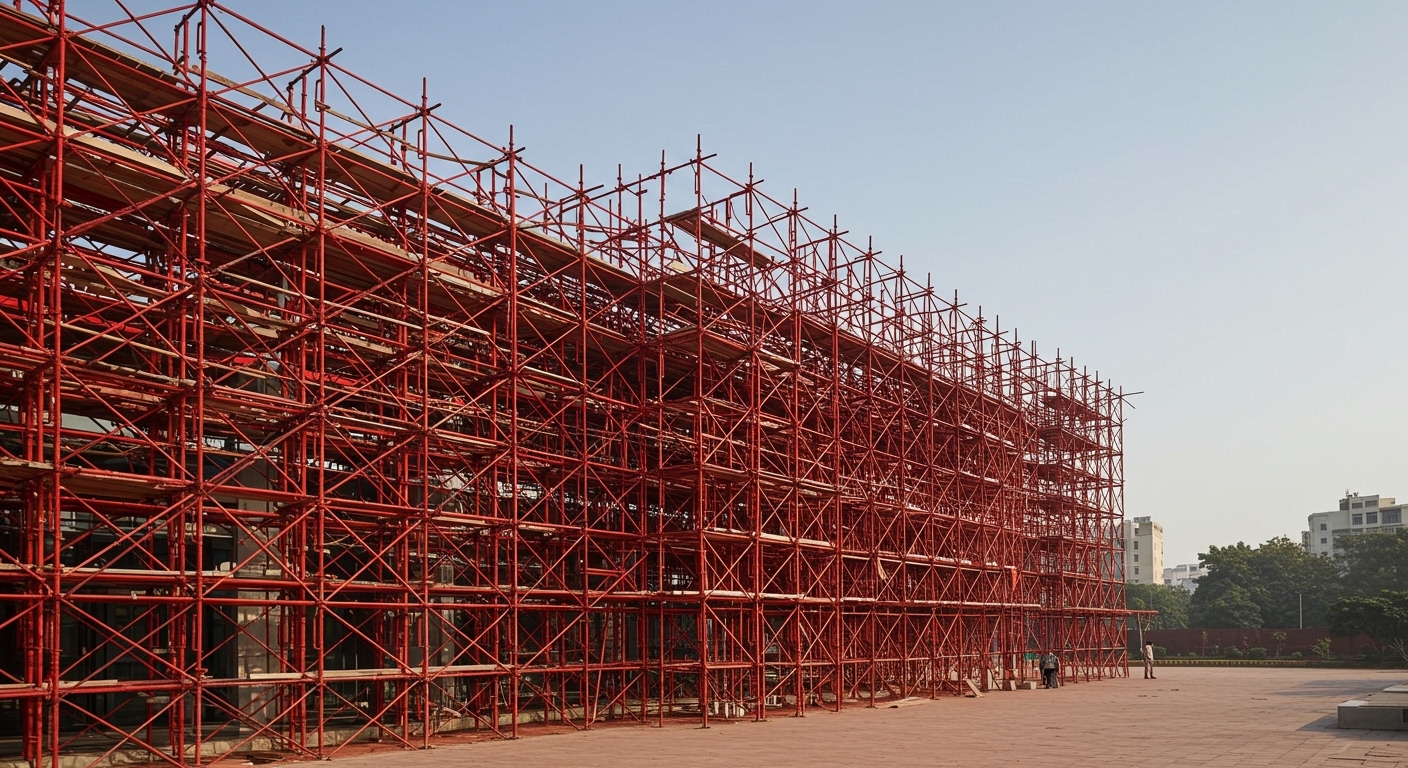
The Reclaimed Pavilion by Kanan Modi Associates, a temporary events space constructed from salvaged materials within a rapidly developing neighborhood, directly challenges conventional notions of architectural longevity and material prestige. While the industry frequently valorizes novel, permanent constructions and virgin materials as benchmarks of quality and innovation, Kanan Modi Associates demonstrates that significant architectural value can emerge from transient structures and purposefully repurposed components. The mainstream preoccupation with ‘signature’ permanent buildings often overlooks the immediate, dynamic social and environmental needs of urban populations and the substantial ecological cost inherent in continuous new material extraction. Instead of prioritizing structures designed to outlast their original function indefinitely, a more responsible architectural approach acknowledges the cyclical nature of urban development. Buildings, particularly in fast-growing urban areas like Hyderabad where the Jayabheri Group operates, should be conceived with their eventual disassembly and material re-entry into the supply chain in mind, rather than solely focusing on their initial construction and single-use lifespan.
This perspective suggests that the highest form of material innovation may not always be the synthesis of new, complex composites, but rather the intelligent re-application and strategic reuse of what already exists. The use of red scaffolding, typically seen as temporary construction infrastructure, as a finished structural and aesthetic element in The Reclaimed Pavilion, exemplifies this redefinition of material value. This resource-conscious approach stands in contrast to the creation of new, monumental ‘stone-like’ volumes, even when integrated with green roofs and public spaces, as seen in MAD’s Shenzhen Bay Culture Square. The latter, while creating a valuable urban hub, still relies on significant new material fabrication. Within two years after 2026.08.06, there will be a significant increase in urban zoning regulations in major global cities that mandate a comprehensive material salvage and repurposing plan for any temporary structure exceeding 1,000 square meters, effectively shifting the burden of end-of-life planning to the project’s conceptual inception.
The persistent forces resisting this adaptable, resource-aware approach are primarily rooted in the commercial real estate sector’s ingrained preference for perceived longevity and the associated market valuation of newness. This is compounded by deeply ingrained regulatory frameworks that predominantly favor conventional, permanent building classifications for financing, insurance, and permitting. Developers like the Jayabheri Group, operating in rapidly expanding markets, often prioritize speed of construction, cost-efficiency, and a marketable image of modernity and stability. These commercial drivers can directly conflict with the potentially slower, more intricate processes involved in meticulous material reclamation or designing for planned obsolescence and reuse. Their business models frequently rely on attracting investment based on the promise of enduring permanence and future appreciation, making them inherently hesitant to fully embrace temporary or extensively reused material strategies as primary drivers for their developments.
Architecture professionals should incorporate a “material afterlife plan” into every preliminary project proposal, detailing how primary structural and envelope components could be efficiently reused, repurposed, or recycled if the building’s function or lifespan changes. This plan does not need to be an exhaustive engineering document at the outset, but rather a clear statement of intent for material circularity. This proactive step, even for traditionally permanent structures, encourages a fundamental shift in design thinking from linear consumption to cyclical resource management from the project’s earliest conceptual stages, mitigating future waste and promoting long-term value.
TL;DR
Architecture must embrace responsive, transient forms and prioritize material reuse within existing urban cycles.
Curated References
About this editorial — This piece was developed using AI-assisted research and curation across multiple industry sources. All analysis, opinions, and predictions represent the editorial perspective of JHDD. Sources are linked in the references section above.