JHDD 3D Modeling Report — 2026.07.24
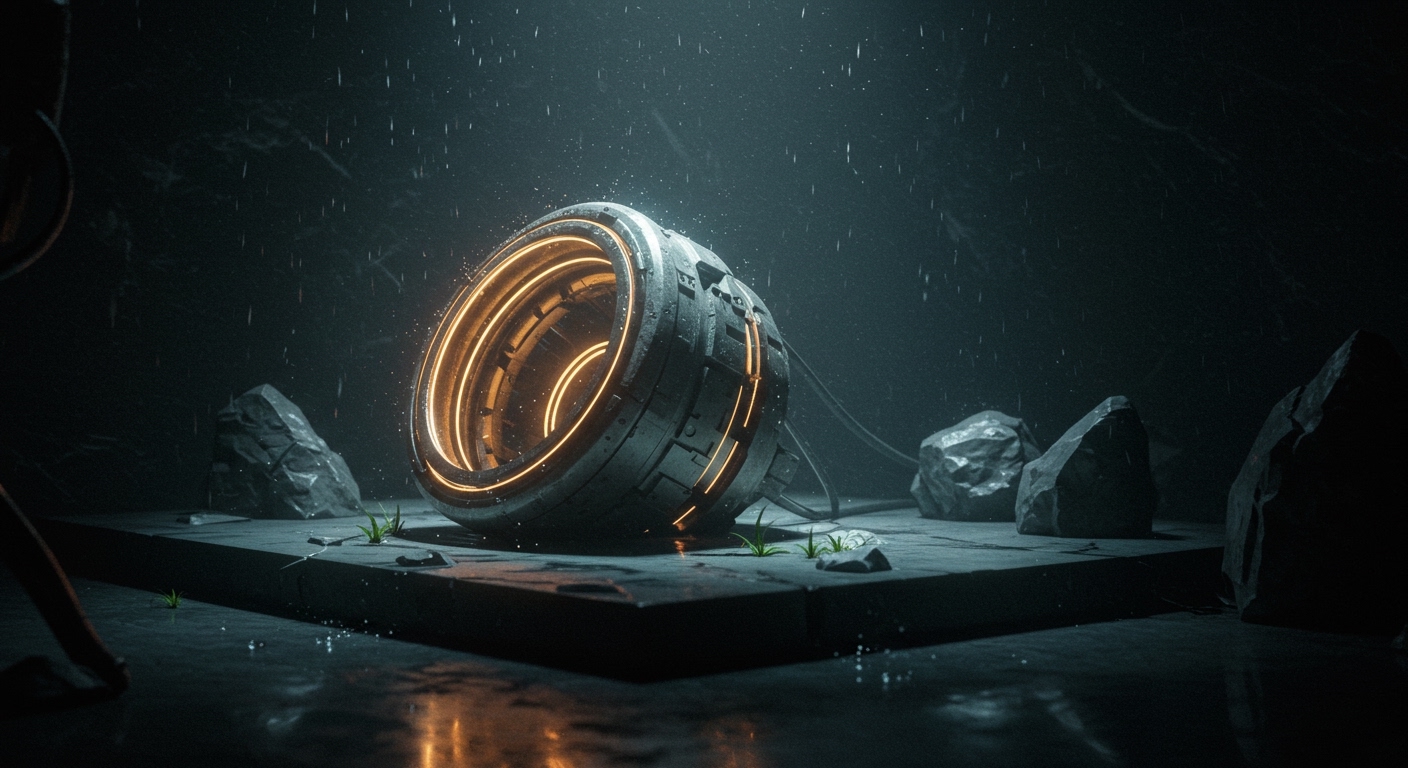
Mirza Beig’s custom Unity URP renderer produced a “heavy rain scene” demonstrating sophisticated lighting dynamics and environmental immersion. This work highlights a critical convergence: the advanced simulation of virtual spaces increasingly depends on the interplay between procedural generation, high-fidelity data capture, and artist-driven control. It is a pattern observed across disparate announcements, where specialized tools for detail, like the Blender tool for drawing hair strands, complement broader platform updates such as 3ds Max 2027.2’s native Gaussian Splat support.
The mainstream industry opinion often suggests that technologies like Gaussian Splats, by offering rapid photogrammetric capture of hyper-real environments, will primarily streamline asset creation by reducing manual modeling efforts for realism. This view overlooks the deeper challenge of semantic control. While 3ds Max 2027.2 provides native support for Gaussian Splats, the raw captured data, despite its visual fidelity, lacks inherent structural information amenable to traditional animation, modification, or procedural variation. A captured wet street scene, while stunning, is difficult to adapt for changing weather conditions or for integrating interactive elements without manual intervention. The true power of these tools lies not in replacing modeling, but in establishing a rich, photoreal baseline that artists must still interpret, reconstruct, and stylize. The artist’s role shifts from creating every polygon to intelligently manipulating complex data sets, identifying and extracting actionable semantic information from dense point clouds.

The real innovation occurs when artists can semantically reconstruct elements from Gaussian Splats, allowing for procedural modification of captured reality. For instance, rather than just displaying a static splat of a tree, an artist could extract its trunk and branch structure to procedurally generate seasonal variations or wind animations. This capability implies a future where engines dynamically interpret captured data to enable editing on a foundational level, treating splats as a starting point for intelligent proceduralism. By mid-2028, development environments will likely integrate more robust tools for converting splat data into editable mesh proxies or procedural rule sets, enabling artists to exert creative control over highly realistic, captured environments.
The opposing force to this integrated workflow often comes from a technological divide and an artistic preference for clear stylistic boundaries. Many traditional 3D modeling professionals resist engaging with unstructured data formats, preferring the explicit control of polygonal geometry. Conversely, creators focused on stylized non-photorealistic rendering, such as the developers behind the “Hand-Drawn Dark Fantasy Point-and-Click Adventure” sequel, prioritize unique artistic expression over hyper-realistic simulation. This resistance, while valid for specific creative outcomes, misses the potential for hybrid approaches to expand artistic toolkits and efficiencies even within stylized contexts, such as using splats for rapid environment blocking or material studies before applying stylized filters.
A 3D Modeling professional should immediately begin experimenting with integrating Gaussian Splat datasets into their existing DCC pipeline, beyond mere static visualization. Professionals should specifically practice using splats as a high-fidelity reference for re-topologizing crucial assets or as a source for custom texture projection, forcing a workflow that merges captured reality with semantic, editable geometry.
TL;DR
Hyper-realism requires artists to master hybrid workflows that semantically control complex data from procedural tools and captured reality.
Curated References
About this editorial — This piece was developed using AI-assisted research and curation across multiple industry sources. All analysis, opinions, and predictions represent the editorial perspective of JHDD. Sources are linked in the references section above.