
JHDD 3D Modeling Report — 2026.06.21

Fox 福克斯’s “Beautiful Character with Spellbinding Eyes” exemplifies the current obsession with granular hyper-realism in character design.
These recent reports collectively highlight a deepening convergence: advanced procedural generation tools are not simplifying the pursuit of hyper-realism in virtual spaces, but rather enabling its expansion into user-driven, monetized ecosystems. The appeal of a Houdini Foam Simulation that evokes a desire to “touch it,” alongside the massive growth of platforms like Unreal Editor for Fortnite, points to a user base increasingly accustomed to and demanding of physically believable, interactively rich digital environments.
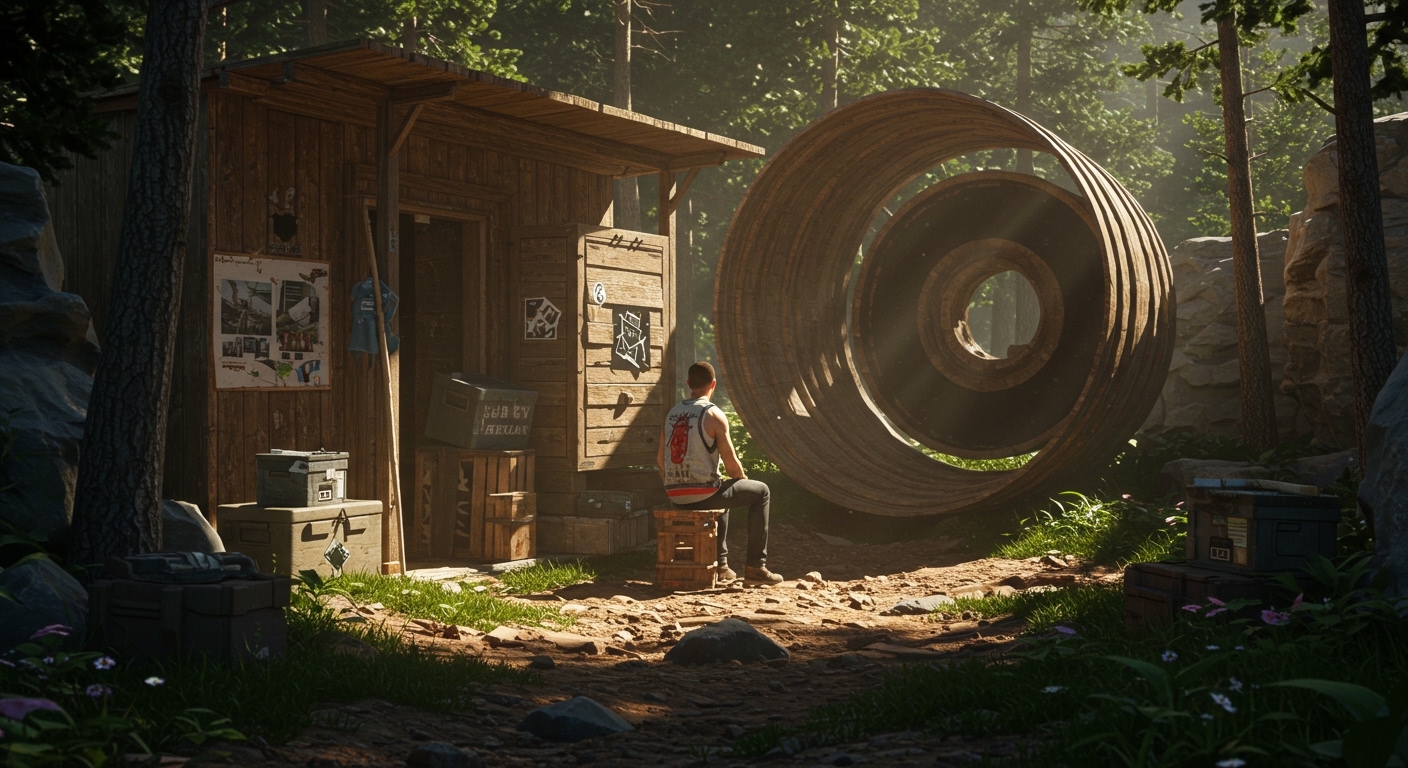
Mainstream industry opinion often interprets the growth of platforms like Unreal Editor for Fortnite (UEFN), with their “AI-assisted workflows” and “Verse” scripting, as a move towards less skilled, more automated content creation. However, this view overlooks the heightened demand for expert-level procedural logic and advanced material science knowledge required to truly differentiate within these accessible frameworks. While Epic Games has paid out over $1 billion to indie creators through UEFN, the ease of entry also creates a significant noise floor. True artistry now lies in mastering the underlying systems that generate complex, believable spaces and assets, rather than simply assembling pre-fabricated components. By mid-2027, the most successful creators in UEFN will be those who actively merge deep scripting in Verse with bespoke photogrammetry workflows, moving beyond purely synthetic assets to integrate scanned reality with procedural adaptability.
The perceived “satisfaction” from a Houdini Foam Simulation signals a critical shift beyond mere visual fidelity to material and haptic realism. This isn’t solely about rendering surfaces; it’s about simulating dynamic, interactive material properties that respond believably to virtual physics and lighting. Achieving this requires a profound understanding of subsurface scattering, fluid dynamics, and complex shader graphs, extending far beyond traditional modeling. Within two years, game engines like UE6 will likely see native, real-time volumetric light transport solutions become commonplace. This will enable dynamic global illumination that reacts to procedurally generated content with physical accuracy previously reserved for offline renderers, further blurring the line between pre-rendered and real-time hyper-reality.
The primary resistance to this evolution comes from developers and studios still heavily invested in traditional, hand-crafted asset pipelines for bespoke content. Their skepticism towards AI-assisted workflows and the rapid evolution of procedural engines, as noted in “State of Unreal UE6 Reactions,” stems from a perceived loss of artistic control or a devaluation of artisan skill in purely manual creation. This perspective often overlooks the potential for procedural tools to augment, not replace, skilled craftsmanship.
A working 3D Modeling professional should immediately dedicate focused time to learning a procedural graph editor, such as Houdini’s Solaris, Unreal Engine’s Material Editor, or even Blender’s Geometry Nodes. This will provide a foundational understanding of how material properties and asset variations can be driven by logical parameters rather than solely by manual sculpting.
TL;DR
The drive for hyper-realism in virtual spaces now demands mastery of procedural generation tools and underlying physical material properties, not just traditional modeling skills.
Curated References
About this editorial — This piece was developed using AI-assisted research and curation across multiple industry sources. All analysis, opinions, and predictions represent the editorial perspective of JHDD. Sources are linked in the references section above.