JHDD UI UX Report — 2026.06.18
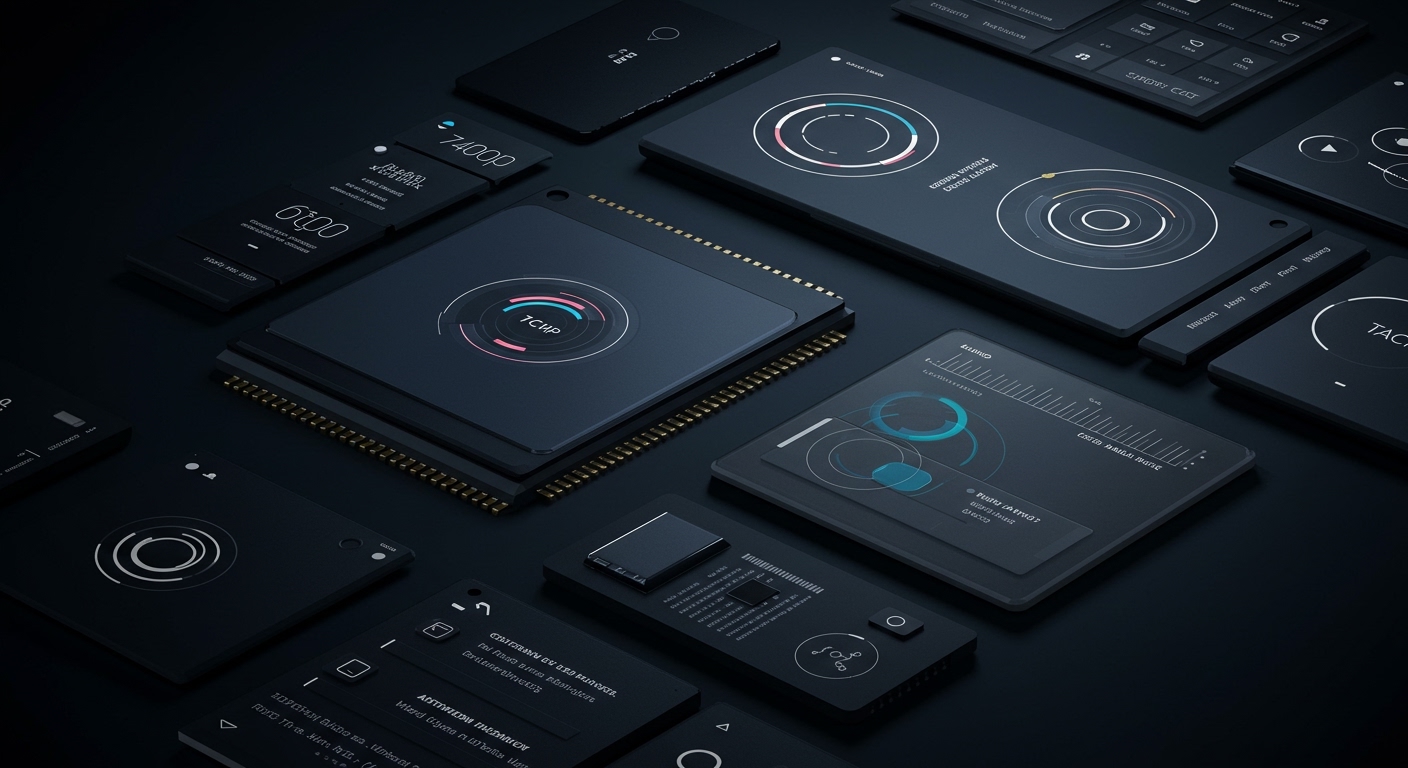
The 7400 chip, a foundational component, represents a design sensibility that often gets overlooked in contemporary discussions about AI products.
Recent discussions in design intelligence point to a critical gap between observable product interfaces and the underlying mechanisms that truly shape user trust and interaction. Whether examining the foundational hardware of computing, the uncertain outputs of AI systems, or the subtle financial “micro-moments,” there is a consistent theme: the real user experience often resides in areas traditionally considered outside the primary scope of UI/UX design. This is about concrete, systemic interactions that define product success.
One widespread industry view often prioritizes the visual coherence of brand systems and the smooth flow of onboarding experiences as prime determinants of user trust. This perspective, however, overlooks deeper, less visible interactions. The author designing financial products at Highnote states that trust is won or lost in “micro-moments” most teams fail to design on purpose. This contradicts the conventional wisdom that slick branding or polished initial flows are the primary architects of user loyalty. Instead, the fidelity of a small transaction detail or the handling of an unexpected error holds disproportionate weight.
This shift in understanding demands a re-evaluation of design investment. For AI-driven products, the sentiment that “the board is not the game” applies directly. Teams might meticulously design “pieces, cards, and screens” for an AI application, yet entirely miss designing the overarching interaction logic that dictates how the system behaves under varying, uncertain conditions. This calls for integrating “Probabilistic Design,” a mindset that acknowledges and plans for uncertainty in AI outputs rather than treating predictions as certainties. By mid-2028, design systems will explicitly incorporate patterns for displaying varying degrees of certainty in AI-generated content, pushing beyond simple loading states to communicate confidence levels transparently.
Resistance to this comprehensive approach stems from established organizational silos and prevailing metrics that favor discrete feature delivery over systemic interaction design. Engineering teams might view these “micro-moments” as implementation details outside design’s purview. Similarly, traditional design portfolio reviews, still reliant on the “before/after” format, reinforce a focus on surface-level changes rather than the deep, often invisible, architectural or interactional shifts that truly improve a product like those at PayPal.
A working UI UX professional should, this week, identify one critical “micro-moment” or “hidden interaction” within their current project that is currently treated as an engineering detail. Develop a specific design proposal for that moment, detailing its interaction pattern, usability considerations, and how it impacts user trust, even if it does not involve a screen.
TL;DR
Real user trust and usability are increasingly determined by systemic, often hidden, interactions and probabilistic thinking, not just visible interfaces or brand systems.
Curated References




About this editorial — This piece was developed using AI-assisted research and curation across multiple industry sources. All analysis, opinions, and predictions represent the editorial perspective of JHDD. Sources are linked in the references section above.