JHDD Interior Report — 2026.06.10
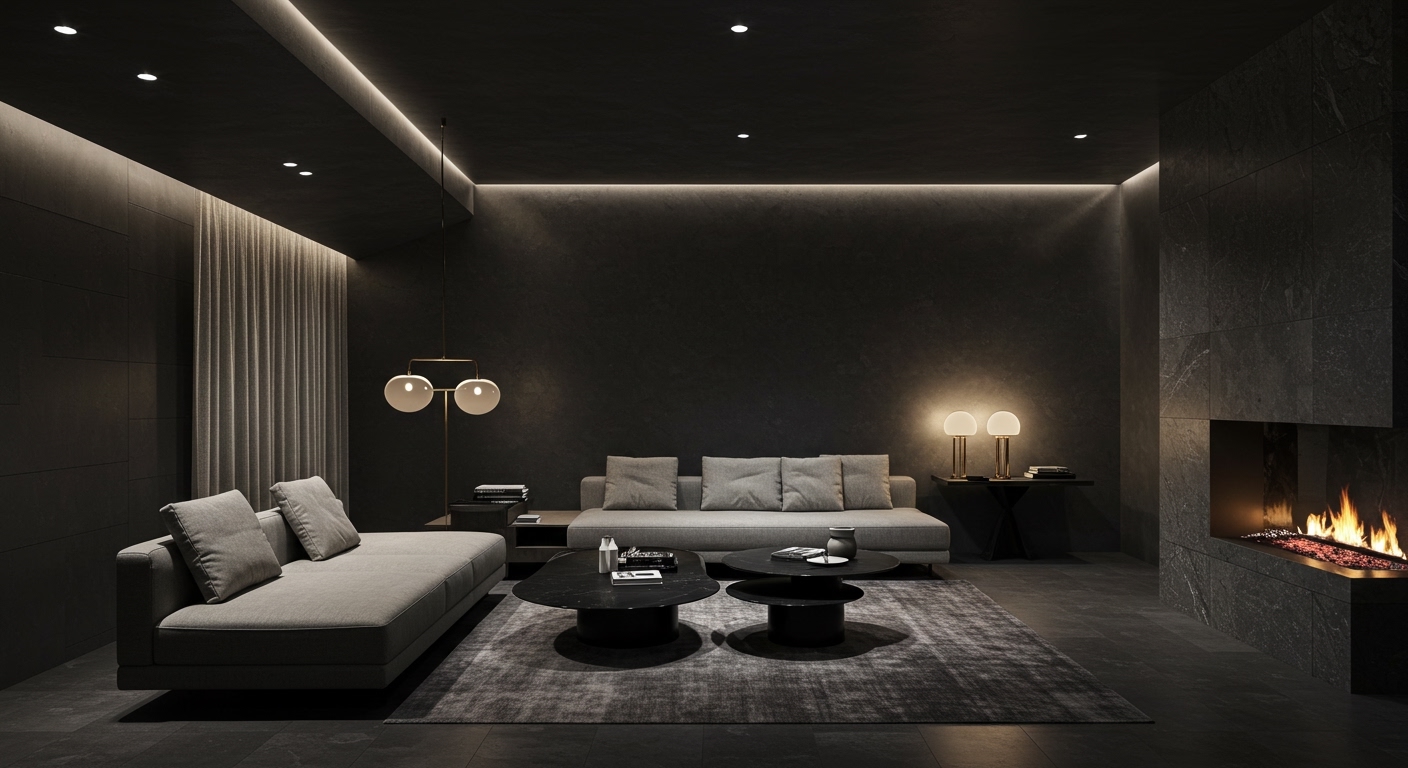
The ascendant materiality in contemporary luxury is not about visible opulence, but about the resonance of the tactile and the implied narrative of enduring substance.
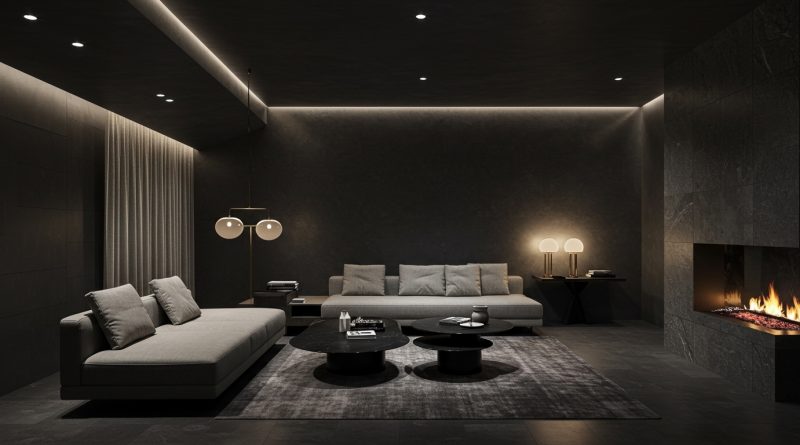
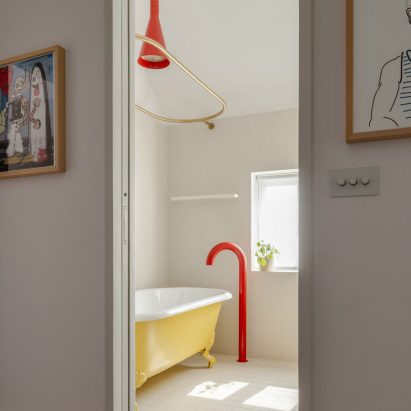
These seemingly disparate projects—a kebab shop embracing industrial grit, a Japanese restaurant channeling neo-noir urbanism, an office unified by a specific chromatic accent, a fragrance showroom evoking geological forms, and a collection showcasing vibrant tapware—collectively signal a powerful, yet nuanced, shift in design intent. The underlying force is a yearning for authentic sensorial engagement, a deliberate pushback against the ephemeral and the digitally saturated. This isn’t merely about aesthetics; it’s about anchoring the human experience in physical presence. Designers are increasingly exploring “deep materiality,” moving beyond surface finishes to consider the inherent qualities of materials and their capacity to evoke memory, history, and a grounded physicality. This manifests as an interest in patinated metals that tell a story of time, unpolished stones that speak of earth, and textiles that demand to be touched, creating spaces that feel less like stages and more like lived-in realities, albeit curated ones.
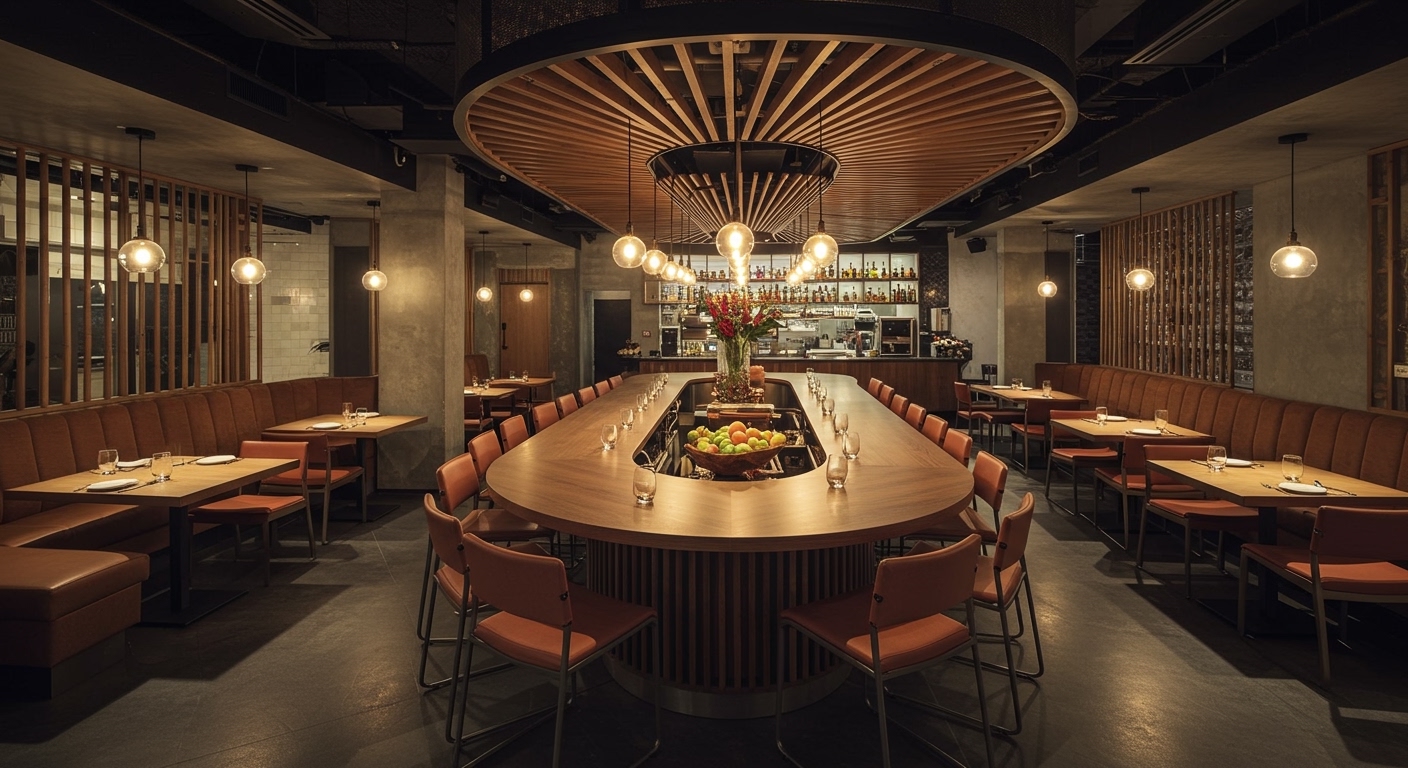
Beneath the surface of these trend explorations lies a sophisticated calibration of spatial tension, driven by a profound understanding of human flow and interaction. The Kiez Kebab’s communal steel table, for instance, creates an “archipelago of steel,” fostering a democratic yet defined spatial hierarchy, guiding movement while encouraging serendipitous encounters. Similarly, Islyn Studio’s Uchi DC, with its neo-noir urbanism, doesn’t just employ dark tones; it sculpts shadow and light to create pockets of intimacy within a larger, more public setting, subtly choreographing the diner’s journey. This approach directly contradicts the prevalent, albeit diminishing, industry inclination towards open-plan universality that often sterilizes human interaction. The focus shifts from maximizing perceived space to optimizing the quality of experience within defined zones. A key characteristic is the deliberate introduction of contrasting tactile experiences: the cool, unforgiving surface of honed stone adjacent to the yielding softness of a deeply woven textile, or the industrial rawness of concrete encountering the refined sheen of brushed bronze. This juxtaposition is not accidental; it is a calculated strategy to heighten sensory awareness, to make occupants more conscious of their physical environment and their own presence within it. By late 2026, this emphasis on deeply resonant materiality and orchestrated spatial tension will become the benchmark for truly memorable luxury interiors, moving beyond transient fads to establish a new, enduring aesthetic.
The friction in this evolving landscape arises from the lingering inertia of efficiency-driven, mass-produced design solutions. Many developers and commercial entities, accustomed to prioritizing speed and cost-effectiveness, remain resistant to the investment required for sourcing and integrating authentic, deep materials or meticulously crafting nuanced spatial experiences. This tension is evident in the persistent demand for readily available, generic finishes that offer a superficial semblance of luxury without the inherent tactility or narrative depth. The struggle is between the immediate profitability of standardized approaches and the long-term value of creating spaces that foster genuine human connection and sensory richness. This resistance highlights a crucial debate: whether interiors are primarily commodities to be consumed or environments to be inhabited and experienced.
For a working Interior professional, the actionable insight lies in a recalibration of material specification. Instead of defaulting to the most readily available or ostensibly “premium” finish, investigate the provenance and inherent characteristics of materials. Seek out those that offer a distinct tactile quality – a rough-hewn stone, a hand-knotted rug, or a subtly textured metal. Consider not just how a material looks, but how it feels to the touch, how it ages, and what story it tells. This week, challenge one material specification in an active project to explore a more deeply resonant alternative, focusing on its sensorial impact and its contribution to the overall narrative of the space.
TL;DR
The future of luxury interior design lies in the deliberate cultivation of deep materiality and orchestrated spatial tension, prioritizing tactile resonance and human flow over superficial opulence.
Curated References


About this editorial — This piece was developed using AI-assisted research and curation across multiple industry sources. All analysis, opinions, and predictions represent the editorial perspective of JHDD. Sources are linked in the references section above.