JHDD Architecture Report — 2026.10.10
The collapse of The Line project in Saudi Arabia signifies a critical juncture for urban planning and architectural ambition.
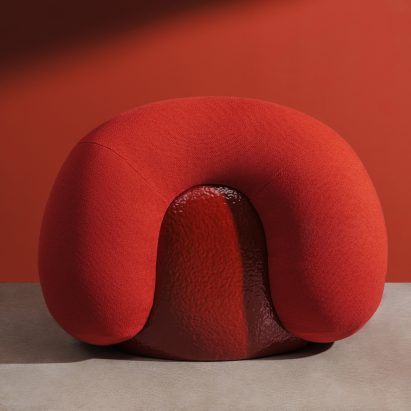
This singular event, when viewed alongside Ujizono Architects’ Sugi House in Kyoto, the Hönggerberg Data Center by Penzel Valier, and even the short-lived allure of celebrity-designed homeware, reveals a systemic tension. Architecture is bifurcating into two distinct paths: one chasing performative spectacle and unchecked scale, the other pursuing contextual integration and enduring functional value. The recent Dezeen Showroom presentation of various seating types, including modular systems, also points to a broader industry struggle between transient trends and design for longevity.
Ujizono Architects’ Sugi House in Kyoto offers a counter-narrative to the prevailing industry fascination with monumental, disconnected forms. Co-founders Kazuki Ujigawa and Mirai Ozono describe their approach as a “subtle rearranging” of typical local homes, contrasting an enclosed ground floor with an expansive first floor under a gabled roof. Conventional wisdom often equates architectural progress with radical departures and dramatic interventions that grab headlines. However, true innovation, especially within dense urban fabrics, lies not in erasure or imposition, but in a profound understanding and sensitive reinterpretation of existing spatial and material typologies. This approach fosters continuity and reinforces the social fabric, rather than severing it for a fleeting visual statement. The integrity of the structure and the honesty of its materials become paramount when the architectural gesture is one of integration rather than disruption.
The Penzel Valier Data Center for ETH Zurich further demonstrates the power of an integrated approach, where structure, building services, and design were conceived together from the outset. This methodology prioritizes long-term performance and adaptability over superficial aesthetics. The industry’s current infatuation with rapid prototyping and digital fabrication, while valuable, often overlooks the foundational principles of structural integrity and urban embeddedness. This often leads to designs that are technically impressive but contextually hollow or unsustainable. It is predicted that by mid-2028, leading architectural commissions will increasingly demand demonstrable evidence of material and structural life-cycle analysis during the preliminary design phase, shifting away from purely aesthetic justifications.
The primary resistance to this paradigm shift comes from the confluence of speculative development and consumer-driven brand extension. The spectacle of projects like The Line, despite its ultimate failure, reflects a powerful desire for instant iconic status and aspirational branding. Similarly, Victoria Beckham’s debut homeware collection for Westwing, featuring items like shell-shaped butter dishes, exemplifies how short-lived trends and celebrity endorsement can overshadow considerations of material provenance, durability, and a genuine connection to architectural principles. This superficial layer of design prioritizes marketability and perceived luxury over fundamental design values, fostering a culture of rapid consumption that undermines long-term material honesty and urban responsibility.
Architecture professionals should critically re-evaluate their material palettes, prioritizing regional resources and specifying systems that allow for modularity and disassembly. This week, a working professional should initiate a dialogue with their structural engineering team and material suppliers to identify at least one primary structural or cladding material within an active project that can be sourced within a 200-mile radius, and investigate its end-of-life potential for reuse or recycling. This is a concrete step towards both material honesty and reduced embodied carbon.
TL;DR
Thoughtful, integrated architecture focused on material honesty and urban context provides more enduring value than large-scale, disconnected projects.
Curated References


About this editorial — This piece was developed using AI-assisted research and curation across multiple industry sources. All analysis, opinions, and predictions represent the editorial perspective of JHDD. Sources are linked in the references section above.