JHDD Interior Report — 2026.09.21
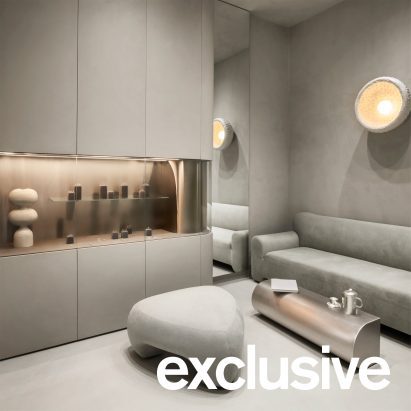
Victoria Yakusha Studio’s work for the Guzema boutique in New York City uses an almost monochromatic interior to create a highly focused retail experience.
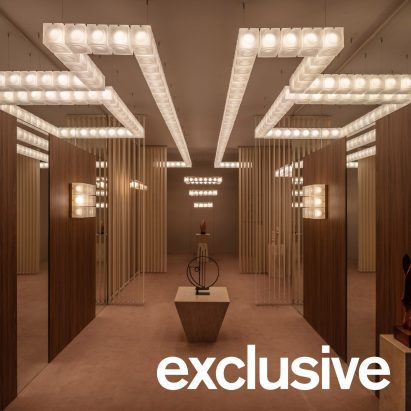
This focused intensity, rather than generic flexibility, represents a deeper current linking recent luxury design projects. From the specific acoustic tuning of Fritz Hansen’s Bauhaus-inspired listening spaces to Lee Broom’s atmospheric evocation of 1970s glamour through glass-block lighting, designers are intentionally crafting contained sensory or activity states within broader spatial contexts. The pattern is a move towards designing for focused engagement, where distinct material choices and spatial arrangements dictate specific human responses and interactions, rather than merely accommodating multiple functions.
Victoria Yakusha Studio’s sculptural, almost monochromatic interior for the Guzema boutique exemplifies this. Mainstream retail design often dictates spaces must be vibrant, constantly updated, or neutral backdrops for merchandise. Yakusha’s approach, however, contradicts this by crafting a deeply immersive, almost reverential environment. The singular material narrative, implied by the monochromatic palette and sculptural forms, shifts focus from product quantity to its intrinsic value, creating a quiet intensity. This is not minimalism for its own sake, but rather the deliberate cultivation of a sensory bubble, demanding specific attention and interaction from the visitor.
The spatial tension created by such a singular vision provides a powerful counterpoint to the often-chaotic visual noise of urban environments. This method of designing for focused sensory engagement will expand beyond retail. By mid-2028, residential projects will increasingly feature dedicated “observational” rooms: spaces designed for a single, quiet activity such as reading or meditation, characterized by highly curated, often raw or elemental material palettes that deliberately minimize external distractions and encourage profound presence.
The primary opposing force to this trend remains the pervasive demand for hyper-flexible and multi-functional spaces, driven largely by real estate economics and the perception of efficiency. Many commercial developers and some residential clients still prioritize a blank canvas that can adapt to changing programmatic needs over the creation of deeply specific, sensorially rich environments. This often results in competent but ultimately anodyne designs that lack distinct material narratives or the subtle spatial tension needed for genuine impact.
Interior professionals should, therefore, recalibrate their initial client consultations. Instead of starting with functional lists or aesthetic preferences, begin by mapping the client’s desired specific sensory states and activities for each proposed zone. For example, for a living area, consider not just seating arrangements, but the precise tactile quality of every surface, the desired acoustic profile, and the intentional light sources that define distinct moods or functions, even if these elements contrast sharply with adjacent areas.
TL;DR
Specific material narratives and focused sensory experiences define the next evolution of luxury interior design.
Curated References

About this editorial — This piece was developed using AI-assisted research and curation across multiple industry sources. All analysis, opinions, and predictions represent the editorial perspective of JHDD. Sources are linked in the references section above.