JHDD Architecture Report — 2026.09.17
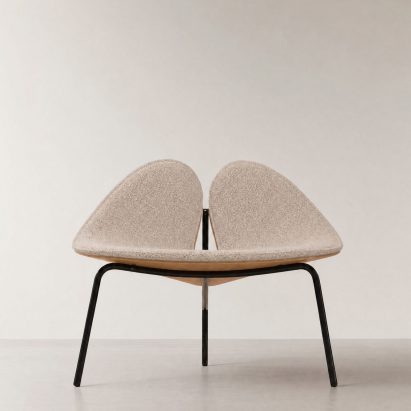
The Gingko lounge chair by Anne-mette Bartholin and Morten Ernst for Cozmo demonstrates the potential of simple material transformation from two to three dimensions with minimal waste.
A recurring pattern across recent design reports is the re-evaluation of resource application, whether through material constraint, urban contextualization, or the intelligent elevation of everyday objects. This signifies a shift from mere problem-solving to finding inherent value within existing conditions and limitations, rather than seeking ever-more complex or distant solutions.
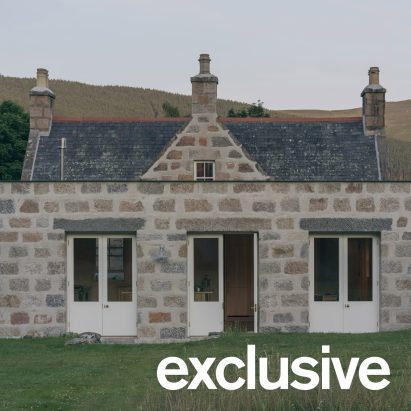
Architecture Office’s extension to Cairngorm Cottage in Scotland exemplifies a profound material honesty, using Scottish ash joinery and local granite walls. The prevailing industry focus on “innovative” new sustainable materials often overlooks the deep intelligence and lower embodied carbon found in traditionally available, regionally sourced building methods. This is not a call for stylistic traditionalism, but for a rigorous re-engagement with materials whose performance is understood across generations, a precision often mislabeled as conservative. By late 2027, project valuations will increasingly integrate detailed lifecycle analysis, driving a market preference for proven regional materials over novel, unvalidated ‘green’ alternatives.
The Dance, Music and Theatre Conservatoire in Massy by Dominique Coulon & associés presents a brick-toned, cube-like edifice whose compactness effectively disguises its internal spatial complexity. Much of contemporary urban design discourse champions explicit transparency or visually assertive statements in public architecture. However, the Massy Conservatoire shows that buildings can contribute robustly to urban density and definition through thoughtful discretion and internal richness, rather than through overt visual performance. Such an approach fosters an urban context that values spatial contribution and material integrity over constant architectural spectacle.
This resistance to overt display and material novelty directly conflicts with the real estate development models that prioritize generic, market-driven aesthetics and rapid construction cycles. It also stands against the aggressive marketing of unproven “sustainable” products by large material manufacturers who often conflate novelty with genuine environmental benefit.
This week, an architecture professional should research a forgotten or underutilized local material within their region—perhaps a specific type of brick, timber, or earth—and then develop a detailed conceptual application for a current or hypothetical project, exploring its structural and aesthetic potential without chemical modification or complex fabrication.
TL;DR
Intentional design focuses on material integrity and contextual integration, moving beyond superficial innovation.
Curated References


About this editorial — This piece was developed using AI-assisted research and curation across multiple industry sources. All analysis, opinions, and predictions represent the editorial perspective of JHDD. Sources are linked in the references section above.