JHDD Architecture Report — 2026.10.05
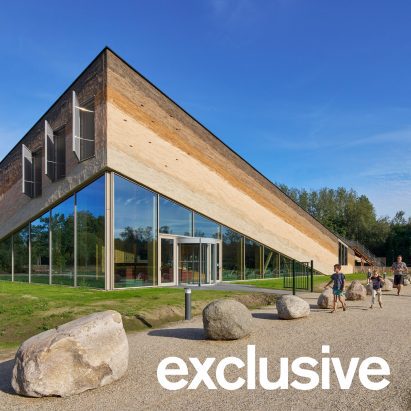
Studio Marco Vermeulen’s Museum Vonk in Eindhoven employs pigmented lime plaster on hempcrete facades, demonstrating a commitment to bio-based construction. This project, alongside others, highlights an architectural shift towards fundamental material intelligence and inherent resilience, moving beyond superficial aesthetics or isolated technological fixes. The diverse projects, from the Van Peborgh Lodge’s regional material grounding to the Singelblok’s urban density, share a common thread: an embedded pragmatism about resources, adaptability, and enduring structural philosophy. Architects are re-examining how buildings can perform more effectively and responsibly over their lifespan through their core material composition and spatial flexibility.
The industry often prioritizes complex mechanical systems and “smart” technologies as primary drivers for sustainable outcomes. However, the true innovation lies in the inherent performance of the structural and envelope materials themselves. Studio Marco Vermeulen’s use of hempcrete at Museum Vonk exemplifies this, prioritizing an affordable, low-impact material that inherently contributes to thermal performance and carbon sequestration. This contrasts with the conventional wisdom that sustainable architecture must first integrate sophisticated digital controls or highly processed composite materials. The future of resilient urban fabrics does not exclusively depend on advanced computational design but equally on a deep understanding of natural material properties and their assembly. By late 2028, a significant number of municipal planning regulations will begin to offer incentives for projects that specify a minimum percentage of locally sourced, bio-based structural and infill materials, recognizing their lifecycle advantages.
The drive towards adaptive building forms, such as those implied by modular furniture systems like Golem Amoreba, further illustrates this focus on enduring utility and resourcefulness. This extends to the urban scale where projects like Singelblok in Amsterdam-Noord create dense, diverse living environments through thoughtful articulation of multiple residential units. These approaches collectively resist the prevailing developer-led paradigm that often values maximum immediate return and architectural expediency over long-term material and social responsibility. This short-sightedness frequently results in structures designed for quick turnover, relying on readily available, carbon-intensive materials and standardized, inflexible layouts.
The primary opposing force to this re-materialization of architectural practice is the ingrained inertia of the construction supply chain, coupled with the speculative nature of real estate development. These forces often prioritize predictable, cost-minimized processes using established, often fossil-fuel-intensive, materials and standardized construction methods, which resist the integration of novel or re-emerging bio-based alternatives due to perceived risk and initial cost.
A working architecture professional should, within this quarter, initiate direct conversations with local material producers and fabricators about available bio-based or regionally sourced options for structural components and facade systems, specifically focusing on their embodied carbon data and lifecycle performance. This engagement should aim to build a localized knowledge base that can challenge standard specifications.
TL;DR
Architects are prioritizing inherent material intelligence and adaptable forms for resilient, responsible construction.
Curated References

About this editorial — This piece was developed using AI-assisted research and curation across multiple industry sources. All analysis, opinions, and predictions represent the editorial perspective of JHDD. Sources are linked in the references section above.