JHDD Interior Report — 2026.09.17
Anam Design Studio’s East Sussex home features a red travertine kitchen, challenging the pervasive notion of kitchen neutrality in luxury residential design.
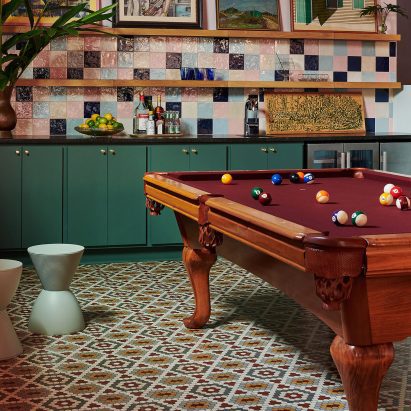
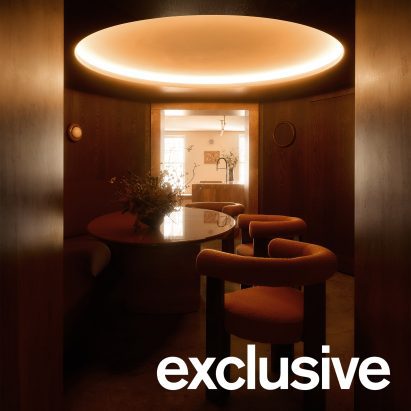
The stories collectively point to a deliberate re-engagement with specific spatial functions and their associated material and atmospheric requirements. Interiors are being sculpted not as blank canvases, but as curated sequences of experiences designed for distinct human activities, from spontaneous games around a billiard table to intimate, club-like dining. This move eschews the generic “lifestyle” aesthetic in favor of pronounced personality, tactile depth, and a focused approach to human flow.
Consider the work of Veronica Mishaan in a Bogotá penthouse, where a “successful juxtaposition” of patterns, including animal prints and bold colours, transforms a 580-square-metre space. This approach directly contradicts the prevailing industry opinion that large luxury residences demand a muted, understated palette to maintain perceived elegance or resale value. Mishaan instead demonstrates that a sophisticated layering of rich patterns and tactile textures can create a dynamic visual and haptic environment. The intent here is not merely to decorate, but to embed a deep sense of identity and personal history within the architecture, anchoring the space with personality while meticulously accommodating an extensive art and antiques collection. The result is a residence that prioritizes the client’s lived experience and emotional connection over a generalized, market-driven aesthetic.
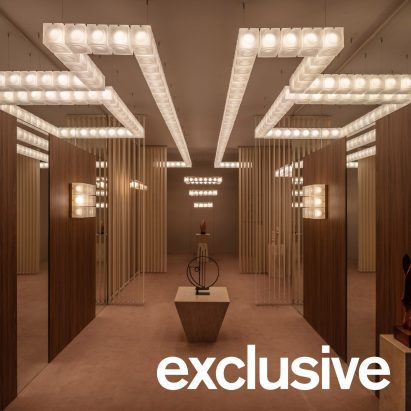
The strategic use of diverse materials and strong visual statements in Mishaan’s work, alongside elements like Lee Broom’s glass-block Chant lighting collection, which evokes 1970s glamour in The Chant Chambers installation, signals a broader shift. These designers are not shying away from materials that command attention or configurations that create distinct atmospheres. The spatial tension generated by these layered elements and deliberate contrasts forces occupants to engage more actively with their surroundings. Individuals are no longer simply moving through neutral zones; they navigate distinct territories, each imbued with its own material signature and ambient quality. This deliberate modulation of human flow and experience through specific material and lighting choices will only intensify. By mid-2027, successful designs will be those that explicitly map interior journeys through a sequence of contrasting tactile surfaces, varied acoustic profiles, and focused lighting schemes, moving beyond mere aesthetics to dictate nuanced emotional engagement and functional specificity.
The primary resistance to this trajectory comes from the persistent influence of developers and their marketing teams, who prioritize broad, palatable aesthetics over distinctive character to maximize perceived market value. This commercial pressure often leads to a flattening of material expression and a reluctance to embrace specific, evocative atmospheres, opting instead for easily replicable, often bland, neutral designs that lack true spatial tension or tactile depth.
An interior professional should immediately review their current projects for opportunities to introduce a specific, unexpected tactile material or a distinct, non-neutral lighting scheme in one particular zone, such as a dining nook or a primary bedroom vestibule. Move beyond simply selecting finishes; instead, design a specific moment within a room, considering how a unique material interaction or a deliberate shift in ambient light will alter human interaction and perception within that precise boundary.
TL;DR
Luxury interiors are shifting from generalized aesthetics to highly specific, tactile, and experiential design focused on curated human engagement.
Curated References
About this editorial — This piece was developed using AI-assisted research and curation across multiple industry sources. All analysis, opinions, and predictions represent the editorial perspective of JHDD. Sources are linked in the references section above.