JHDD Architecture Report — 2026.09.10
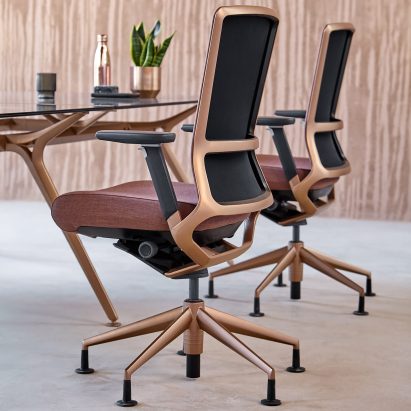
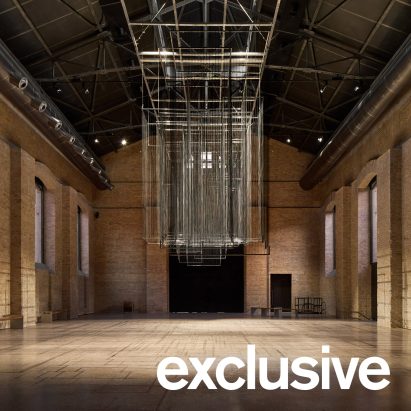
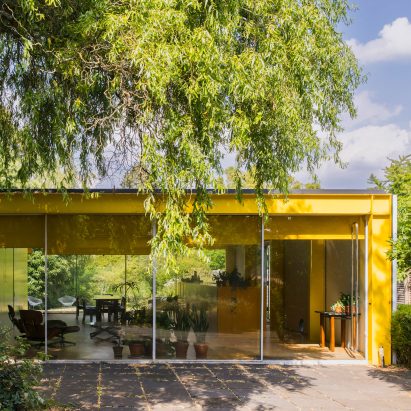
The newly engineered aluminium structure of Actiu’s TNK500 Aurea task chair marks a significant refinement of an established product. This refinement reflects a broader, quieter shift in architectural and product design, moving away from constant pursuit of novelty towards a considered valorization of existing forms, materials, and structures. Projects like Studio KO’s transformation of the Tashkent tram depot and Atelier Vens Vanbelle’s Tomas & Katrien House demonstrate an intelligent engagement with built heritage and urban context, seeking continuity rather than rupture. This thread also extends to the stewardship of modern legacies, as seen with Richard and Su Rogers’ 22 Parkside house, acknowledging the enduring value of well-conceived design.
Atelier Vens Vanbelle’s Tomas & Katrien House inverts conventional notions of innovation by building a new structure from characterful bricks that make it appear as if it has always been there. This contradicts the mainstream industry’s often unstated assumption that architectural innovation must manifest as a stark visual departure from its surroundings, often prioritizing a distinct “signature” over contextual harmony. Instead, the project demonstrates a profound understanding of urban responsibility through material honesty and a structural philosophy that embraces narrative continuity. The perceived “simplicity” of the volume, reminiscent of an old atelier, is a sophisticated act of integration, initiating a dialogue with existing buildings rather than asserting dominance.
This approach offers a more durable form of sustainability than simply specifying “green” materials in a novel form. By grounding new construction in an established material language and a respectful relationship to its site, the Tomas & Katrien House extends the functional and aesthetic lifespan of a building, reducing the pressure for future demolition and reinvention. Mainstream design often equates progress with visible change, yet enduring value often comes from thoughtful evolution and deep contextual embedding. Within two years, this subtle but powerful philosophy will increasingly influence municipal urban design guidelines, favoring proposals that explicitly articulate their contextual material and form integration.
The commercial pressures highlighted by the £900 per square metre fee faced by young designers like Design Everything at LDF 2024 represent a significant opposing force. This economic reality often compels architects and designers to create projects with immediate, high-impact visual appeal to justify investment and gain recognition, inadvertently perpetuating a cycle of visual novelty over deep contextual engagement. Stakeholders prioritizing quick returns or media visibility can inadvertently push for disruptive designs rather than integrated ones.
Architecture professionals should dedicate a segment of their initial project feasibility studies to a “material and historical context mapping.” This involves documenting not only site conditions but also the material language, construction methods, and historical evolution of surrounding buildings, seeking opportunities for direct material dialogue or reuse rather than simply designing in isolation.
TL;DR
Architects must prioritize context-specific material integration and adaptive reuse to foster urban cohesion and true sustainability.
Curated References

About this editorial — This piece was developed using AI-assisted research and curation across multiple industry sources. All analysis, opinions, and predictions represent the editorial perspective of JHDD. Sources are linked in the references section above.