JHDD Architecture Report — 2026.08.31
Rozzol Melara’s two hundred meter courtyard, enclosed by L-shaped blocks of exposed concrete, presents an uncomfortable lesson in scale and intent.
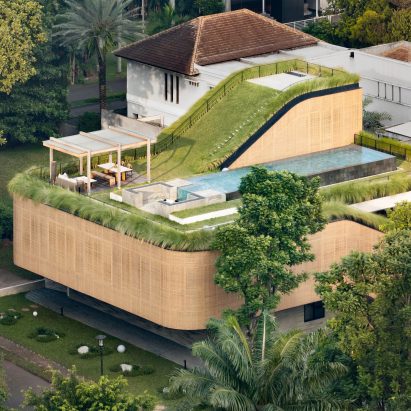
The named projects, from K-Thengono Design Studio’s Split Mass Residence to Ambient’s Public Library in Choszczówka, share a common thread often overlooked in individual project narratives: a tension between visible, tactile material applications and the invisible structural and urban forces they try to mediate. Whether through layered green roofs or explicitly natural materials, there is a visible effort to soften or blend architecture, yet the underlying structural and site decisions dictate the true long-term impact. This pursuit of a softened aesthetic frequently bypasses rigorous questioning of material longevity or genuine urban integration.
Rozzol Melara in Trieste, with its vast concrete forms and deep porticoes, is frequently dismissed as a relic of Brutalist overreach, its monolithic presence a scar on the hillside. This overlooks its initial, ambitious structural philosophy: concrete pylons spaced every fifteen meters carry immense blocks, creating a public realm beneath. This was an honest expression of structure as urban infrastructure. Mainstream criticism focuses on its perceived inhuman scale and material bleakness, yet its very material honesty — exposed concrete — allowed for a durable, adaptable shell, unlike many contemporary “sustainable” veneers that require constant maintenance or rapid replacement. The superficial application of green roofs, as seen in the Split Mass Residence, attempts to achieve a similar integration with landscape but often lacks the robust structural and material integrity needed for genuine longevity and thermal performance beyond surface aesthetics. By mid-2027, the industry will begin to rediscover the inherent value of heavy, monolithic structures, not for their aesthetic of power, but for their thermal mass and inherent resilience against increasingly volatile environmental conditions.
The pervasive idea that lightness and transparency equate to progress or sustainability is a fallacy. True material honesty can often reside in density and permanence. The market’s embrace of lightweight cladding systems, such as the PE rattan facades, while visually appealing, frequently defers the embodied energy cost and creates maintenance burdens that overshadow initial “eco-friendly” claims. These materials, when mass-produced and shipped globally, contribute to a carbon footprint that a regionally sourced, dense concrete pour might, paradoxically, minimize over a century of use. This is not about celebrating concrete’s past aesthetic, but about re-evaluating its structural and material capabilities for true, deep-time sustainability.
The resistance to this re-evaluation comes not from individual architects, but from the systemic pressures of developer-driven project timelines and cost-minimization strategies that prioritize initial capital outlay over life-cycle performance. The drive for rapid construction and marketability often dictates material choices that are easily manufactured, shipped, and assembled, regardless of their long-term urban or environmental cost. The sleek metal display stands designed by Foster + Partners for Norton Motorcycles, while visually precise, exemplify a broader industry trend towards readily fabricated, industrial materials that sometimes overshadow a deeper commitment to site-specific or truly honest material integration.
An architecture professional should, this week, critically analyze the embodied energy and projected lifespan of the three primary material systems in their current project, not just their initial cost or aesthetic appeal. Prioritize structural integrity and material durability over superficial “green” or “modern” finishes.
TL;DR
Architects must prioritize deep material honesty and structural longevity over surface aesthetics and short-term sustainability claims.
Curated References


About this editorial — This piece was developed using AI-assisted research and curation across multiple industry sources. All analysis, opinions, and predictions represent the editorial perspective of JHDD. Sources are linked in the references section above.