JHDD Architecture Report — 2026.08.28
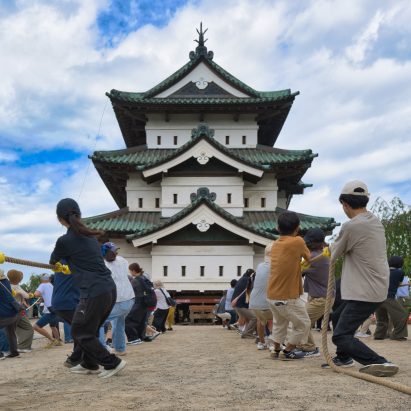
The intricate relocation of Hirosaki Castle’s 360-tonne keep through an ancient hikiya technique defies conventional construction logic.
This event, alongside Tato Architects’ use of silver-painted ceilings to draw light into House in Shichiku and Peris+Toral.arquitectes’ naturally ventilated Social Atrium, reveals an emerging pattern. These projects demonstrate a focus on profound material intelligence and urban responsiveness. They achieve significant environmental and social outcomes through precise, often low-tech interventions that leverage intrinsic properties or existing conditions rather than relying solely on novel forms or energy-intensive systems. This approach values the existing urban and material fabric, seeking to optimize its potential rather than always replacing it.
The Hirosaki Castle relocation exemplifies a structural philosophy prioritizing preservation and deep material engagement. Moving an entire 360-tonne structure using manual, traditional methods directly challenges the prevailing industry narrative which often frames large-scale construction as inherently reliant on advanced machinery and rapid, often disruptive, processes. This method, while slower, ensured the integrity of the historic materials and structure. It represents an extreme form of adaptive reuse, where the object itself, in its complete material form, becomes the subject of a sophisticated logistical and structural undertaking.
Mainstream industry opinion frequently champions digital fabrication, new composite materials, and speed as primary indicators of innovation and sustainability. However, the Hirosaki Castle project suggests that the most truly sustainable and responsible interventions might be those that are slow, labor-intensive, and deeply rooted in a nuanced understanding of materials and structural behavior over centuries. This is not about romanticizing tradition but extracting practical wisdom. Within two years, similar complex structural relocation projects, particularly for retaining historically significant or high-embodied-energy structures in dense urban areas, will gain traction globally, shifting public and professional perception towards the intrinsic value of retaining complete building elements rather than just their facades.
Resistance to such approaches comes from the ingrained economic models of the conventional construction sector. These models prioritize fast turnaround, standardized material supply chains, and the financial incentives often associated with new builds over the meticulous, less predictable processes of adaptation and reuse. The prevalent discourse at events like the London Design Festival 2026, with its emphasis on new products and aesthetic trends, often overlooks the fundamental structural and material responsibilities inherent in preserving and cleverly leveraging existing built environment assets.
An Architecture professional should, in every design brief, conduct an embodied carbon audit not just of proposed new materials, but specifically of the potential for retention, relocation, or substantial reuse of existing structural elements and materials already present on site or within the immediate urban context. This practice moves beyond simple material selection to a strategic assessment of a project’s entire material lifecycle impact, encouraging creative design solutions that valorize what already stands.
TL;DR
Profound material intelligence and urban responsibility emerge from strategies that optimize existing structures and conditions rather than prioritizing new builds.
Curated References



About this editorial — This piece was developed using AI-assisted research and curation across multiple industry sources. All analysis, opinions, and predictions represent the editorial perspective of JHDD. Sources are linked in the references section above.