JHDD Interior Report — 2026.08.27
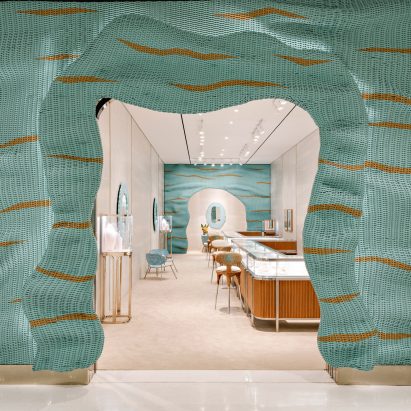
Estúdio Campana wrapped a pop-up Tiffany & Co store in São Paulo with an undulating woven wicker skin.
This detail, alongside others, indicates a prevailing tension in contemporary commercial and hospitality interiors. Design is pulled between the immediate, visually impactful gesture and a deeper, materially honest engagement with a site’s history or local craft. Whether refreshing a heritage hotel or creating a retail presence, designers are navigating how to create spaces that feel both current and rooted. The emphasis shifts between rapid aesthetic turnover and a more enduring spatial narrative that speaks to human interaction and tactile experience.
Estúdio Campana’s design for the Tiffany & Co pop-up store in São Paulo, with its signature blue wicker skin streaked with tan, exemplifies a deliberate and powerful choice in materiality. The approach elevates a temporary retail presence through bespoke craft and tactile richness, creating an environment that feels deeply considered rather than transient. This stands in contrast to the typical flat, glossy surfaces and standardized finishes often deployed in luxury branding, which prioritize pristine visuals over haptic engagement. The Campana work demonstrates a commitment to a specific cultural context and the inherent value of crafted objects, transforming a commercial requirement into an artistic statement about local skill.
While many might argue that pop-up stores are inherently transient, requiring only surface-level visual appeal to drive immediate consumer engagement, this project demonstrates an alternative strategy. It directly challenges the prevailing industry opinion that temporary installations should inherently lack material depth or a tangible connection to artisanal methods. Instead, it suggests a strategic investment in unique tactile experiences can create a more memorable, even if brief, interaction that resonates beyond a quick photo opportunity. This specific application of woven materiality offers a critical counter-narrative to the broader industry embrace of “dopamine decor,” a trend Julie Lasky rightly critiques for its “disingenuous dressing-up of superficial style.” Such trends often prioritize bright, easily consumable visual cues over genuine spatial quality or lasting material engagement. The Campana work proves that luxury retail can achieve vibrancy through artisanal construction, encouraging physical interaction rather than relying on a facile visual spectacle. This tactile emphasis creates a different form of spatial tension, one between the expectation of quick consumption and the appreciation of slow, physical craft. By mid-2027, the industry will witness a discernible shift, with more luxury brands commissioning installations that emphasize bespoke, handcrafted materials even for temporary applications, valuing physical engagement and spatial narrative over purely photogenic attributes.
The most significant opposing force to this trajectory remains the ingrained pursuit of rapid virality and cost-efficiency, heavily influenced by the demands of digital social platforms. The relentless need for instantly shareable, brightly lit, and often two-dimensional visual content for online consumption pushes designers towards less nuanced, more immediately striking aesthetics that photograph well but often lack depth in person. This pressure frequently sidesteps the deeper considerations of human flow, authentic materiality, and the complex spatial tensions inherent in a well-conceived physical environment. It fosters a design culture where the “look” of a space for a fleeting social media post takes precedence over its lived, tactile reality, thus resisting longer-term material investments.
Interior professionals should actively seek out local artisans and material specialists, integrating their unique craft into commercial and hospitality projects, regardless of project scale. Instead of sourcing only off-the-shelf finishes, allocate a portion of the material budget to commission bespoke elements that tell a specific regional story or demonstrate a unique tactile quality. This approach will cultivate a deeper sense of place and offer patrons a more memorable, physically engaging interaction with the space.
TL;DR
Deeper materiality and genuine craft create lasting spatial value over superficial trends.
Curated References



About this editorial — This piece was developed using AI-assisted research and curation across multiple industry sources. All analysis, opinions, and predictions represent the editorial perspective of JHDD. Sources are linked in the references section above.