
JHDD Web Design Report — 2026.08.16

HAOQI.DESIGN’s retro-futurist portfolio exemplifies how scroll sync, glass shaders, and other visual effects emerge from a precise interplay of DOM, CSS, and WebGL.
Recent developments across the web ecosystem reveal a deepening commitment to advanced visual and interactive experiences, not as isolated flourishes, but as integrated outcomes of sophisticated front-end craft. Whether through the precise control offered by new CSS capabilities like the Custom Highlight API or the performance potential of WebGPU for interactive 3D clusters, the common thread is a convergence of artistic ambition and meticulous technical execution. This is about building richer, more engaging user interfaces that respect and extend the web’s native capabilities.
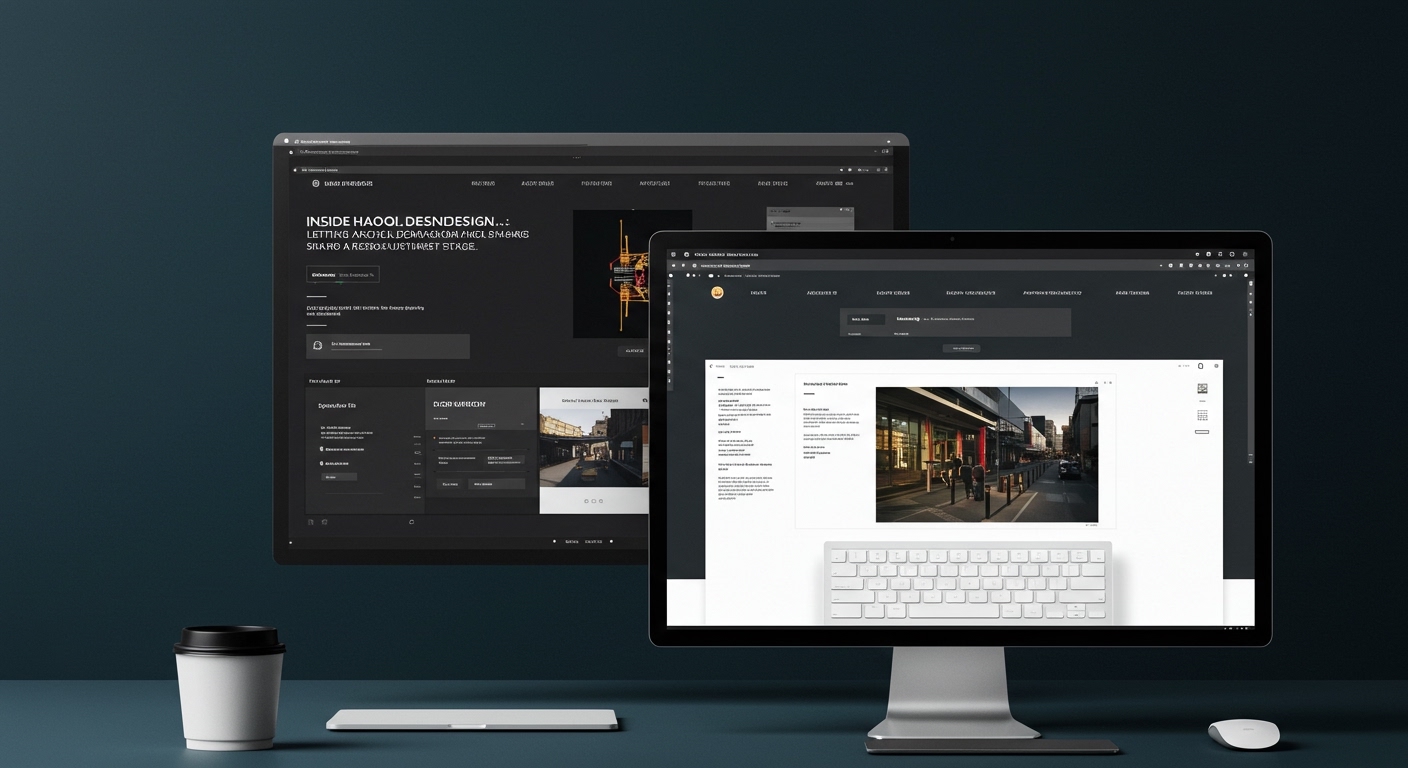
HAOQI.DESIGN demonstrates a specific dedication to craft through its blend of DOM and WebGL. Rather than simply rendering everything within a canvas element, the studio carefully orchestrates how CSS manipulates DOM elements alongside WebGL-rendered graphics, creating complex glass shaders and scroll-synced interactions. This approach challenges a widespread industry belief that highly interactive sites must either be entirely DOM-driven and potentially visually constrained, or exclusively canvas-based and often less accessible. The craft here lies in understanding the distinct rendering pipelines of both technologies, leveraging each for its inherent strengths, and ensuring they communicate seamlessly without sacrificing performance or core web principles. Denis Avramenko’s work, focused on motion and typography, similarly underscores that rich interaction demands thoughtful design and deep technical mastery, rather than relying on superficial, unoptimized effects.
A common misconception states that increasing visual complexity inevitably degrades performance or accessibility. This perspective overlooks significant advancements in browser rendering engines and emerging standards like WebGPU, which enable far more efficient execution of intensive graphics. The true challenge, and where front-end expertise becomes critical, is in intelligently segmenting the work between the DOM and accelerated graphics layers. This means assigning static content and semantic structure to the DOM for accessibility and searchability, while delegating computationally heavy animations or 3D scenes to WebGL or WebGPU. It also demands ensuring that accessibility standards, such as those addressed by correctly implementing aria-hidden, are met universally, irrespective of the chosen visual layer. Within two years, studios that master this hybrid rendering paradigm, exemplified by HAOQI.DESIGN’s precise DOM/WebGL integration, will establish a new benchmark for front-end quality and interactive performance.
The primary opposing force to this integrated craft is the widespread tendency towards abstraction, particularly within large framework ecosystems, which often encourages developers to treat the browser’s rendering process as a black box. This reliance on high-level tools, without a foundational understanding of how the browser renders pixels or manages accessibility trees, can inadvertently lead to performance bottlenecks, overlooked accessibility issues, and a reliance on boilerplate solutions that do not fully leverage the platform’s unique capabilities. This phenomenon is clearly evidenced by common misapplications of aria-hidden, a crucial accessibility attribute, which CSS-Tricks frequently highlights as being incorrectly fixed by many developers.
Web design professionals should dedicate time this week to understanding the Chrome DevTools’ Performance tab, specifically investigating how layout, rendering, and painting events correspond to both DOM manipulations and canvas updates on a live site using WebGL. Pay close attention to CPU and GPU activity, frame rates, and identifying bottlenecks that arise from improper synchronization or excessive re-renders. This direct observation builds intuition for optimizing hybrid rendering approaches and informs better decisions about when and how to integrate advanced graphics without compromising core web vitals or user experience.
TL;DR
The future of advanced web experiences demands a deep, integrated understanding of DOM, CSS, and accelerated graphics, not their separation.
Curated References
About this editorial — This piece was developed using AI-assisted research and curation across multiple industry sources. All analysis, opinions, and predictions represent the editorial perspective of JHDD. Sources are linked in the references section above.