JHDD 3D Modeling Report — 2026.08.15

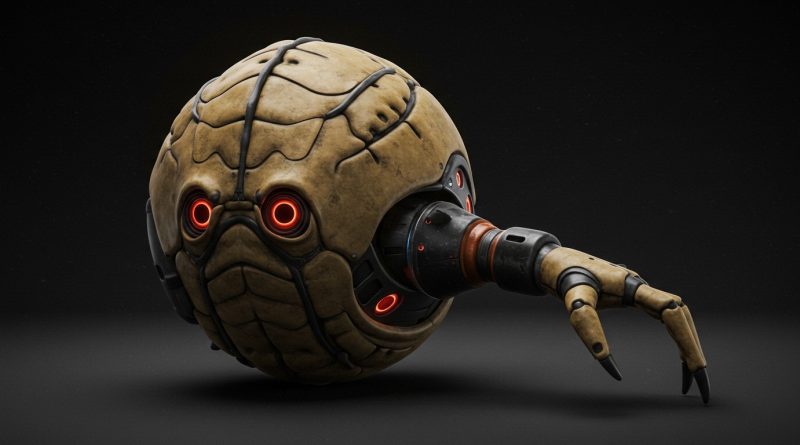
Emanuel Pessel documented his entire process for reimagining Half-Life 2’s Headcrab in a 62-page breakdown.
This specific detail highlights a broader, often unstated pattern: the convergence of hyper-detailed rendering technologies with increasingly sophisticated, yet accessible, procedural and documentation methods. While game studios like Embracer Group push for faster asset creation for titles such as Darksiders 4 and Tomb Raider: Catalyst, the underlying trend involves leveraging advanced rendering pipelines and streamlined content generation, often supported by detailed knowledge sharing. This integration allows for unprecedented fidelity in virtual spaces while simultaneously seeking efficiency.

Pessel’s work exemplifies the current frontier of hyper-realism in virtual environments. Utilizing Unreal Engine 5’s Substrate material system, artists can achieve unprecedented fidelity in material layering and response to lighting dynamics. The 62-page breakdown itself points to a new standard in knowledge dissemination for these complex techniques, moving beyond isolated artist workflows to a more open, shared ecosystem of expertise. Such thorough documentation enables rapid understanding and implementation of advanced rendering practices across the industry.
Conventional industry wisdom often suggests that such extreme fidelity is only achievable through extensive manual sculpting and texturing, making it prohibitively time-consuming for large-scale production. This view misses a crucial point: technologies like Substrate, when combined with procedural tools such as the Procedural American Downtown Generator For Blender, enable artists to strategically dedicate resources to hero assets like Pessel’s Headcrab. This targeted application ensures maximum impact for key elements, knowing that broader environments can be rapidly iterated with high quality. The true power lies in selective application of hyper-realism and the efficiency gains from intelligent proceduralism. By mid-2027, the industry will see a significant shift towards “material-first” proceduralism, where intricate shader graphs drive initial asset development more than mesh topology alone.
The primary opposing force to this evolving methodology is the inertia of entrenched legacy pipelines in larger studios. Embracer Group’s rapid development cycle for games like Tomb Raider: Catalyst, while impressive for its output, often relies on optimizing existing toolsets rather than fully integrating cutting-edge material systems or adopting extensive open-source procedural generators at their core. This resistance stems from the immediate cost of disrupting established workflows and retraining large teams, prioritizing predictable output over fundamental technological shifts.
This week, a 3D modeling professional should download Edutaker’s free stylized line art setup for Blender. Even if their primary work focuses on hyper-realism, experimenting with a fully functional, publicly shared stylized setup forces an engagement with different rendering pipelines and material definitions. This exercise cultivates adaptability, revealing how artistic control can be maintained and even enhanced through shared procedural systems, rather than solely through manual sculpting or bespoke, closed solutions.
TL;DR
The future of 3D asset creation lies in hybrid pipelines merging advanced rendering with intelligent proceduralism and shared documentation.
Curated References
About this editorial — This piece was developed using AI-assisted research and curation across multiple industry sources. All analysis, opinions, and predictions represent the editorial perspective of JHDD. Sources are linked in the references section above.