JHDD Architecture Report — 2026.08.09
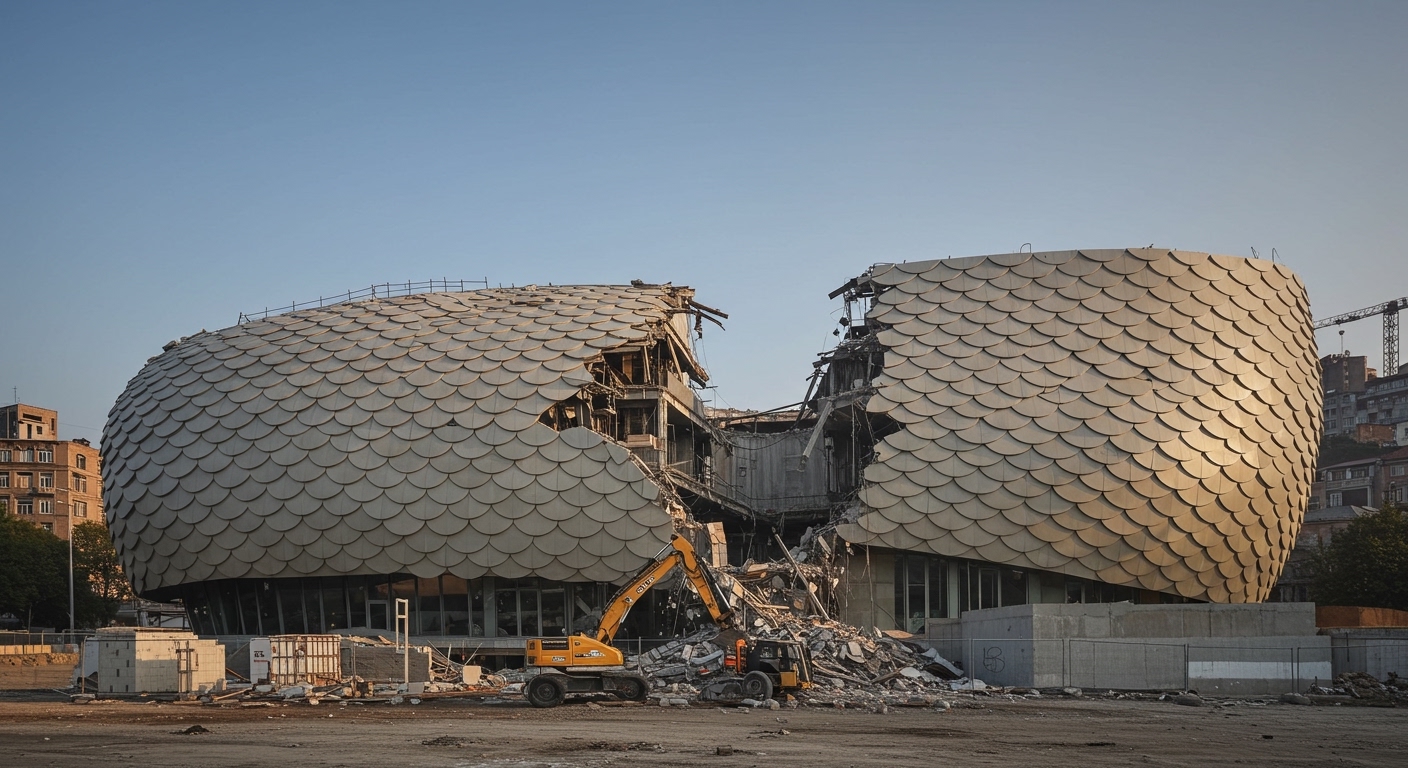
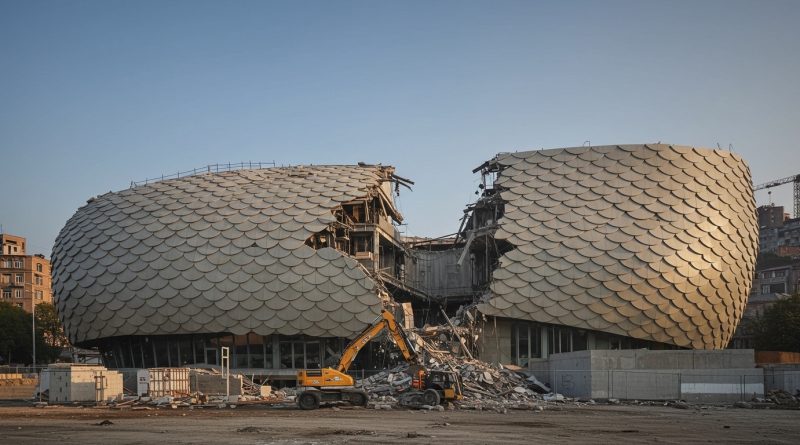
The demolition of Studio Fuksas’ Rike Concert Hall in Tbilisi, with its distinctive scale-like cladding being removed, represents a critical examination of architectural permanence and urban accountability.
These recent events collectively highlight a specific pattern: the growing tension between rapid, high-profile construction and the essential, often overlooked, processes of long-term material intelligence and societal integration. Buildings are increasingly evaluated not just on their initial design impact but on their enduring utility and the wisdom embedded in their construction and deconstruction.
The situation surrounding Studio Fuksas’ Rike Concert Hall provides a clear case study. Remaining unopened since 2012, this structure embodies a significant urban misstep. Mainstream industry opinion often champions singular, bold architectural statements as immediate catalysts for urban identity and economic growth. This perspective frequently overlooks the critical need for a building to genuinely serve its community and function sustainably over time. The failure of the Rike Concert Hall to achieve operational status for over a decade represents an immense waste of embodied energy and material resources, a direct contradiction to principles of sustainability and urban responsibility. An architectural object, regardless of its sculptural ambition, that fails to integrate functionally into its urban fabric becomes a liability, not an asset. Its eventual demolition, fourteen years after completion, underscores that form without function, especially on such a scale, carries a profound environmental and social cost. Within two years, municipalities globally will shift public project approval metrics to heavily weight projected operational lifespan and demonstrable community integration over initial capital cost and perceived iconic potential.
The opposing force in this shift is often found within segments of the development industry and municipal leadership that prioritize immediate visual impact and marketability. They favor rapid, standardized construction methods and globally sourced materials, often at the expense of local material economies and the specialized knowledge of skilled trades. This approach often treats buildings as disposable commodities, leading to cycles of construction and premature obsolescence, rather than as integral, long-term components of the built environment.
An architecture professional should this week initiate a direct dialogue with local craftspeople—stonemasons, carpenters, plasterers—to understand the traditional material knowledge and construction techniques prevalent in their region. This engagement moves beyond digital modeling, fostering a deeper understanding of how materials genuinely perform, age, and contribute to structural integrity, ensuring that future designs are rooted in tested endurance and local resourcefulness.
TL;DR
Sustainable architecture demands buildings that endure through functional integration and embedded material knowledge, not transient spectacle.
Curated References


About this editorial — This piece was developed using AI-assisted research and curation across multiple industry sources. All analysis, opinions, and predictions represent the editorial perspective of JHDD. Sources are linked in the references section above.