JHDD Web Design Report — 2026.07.21
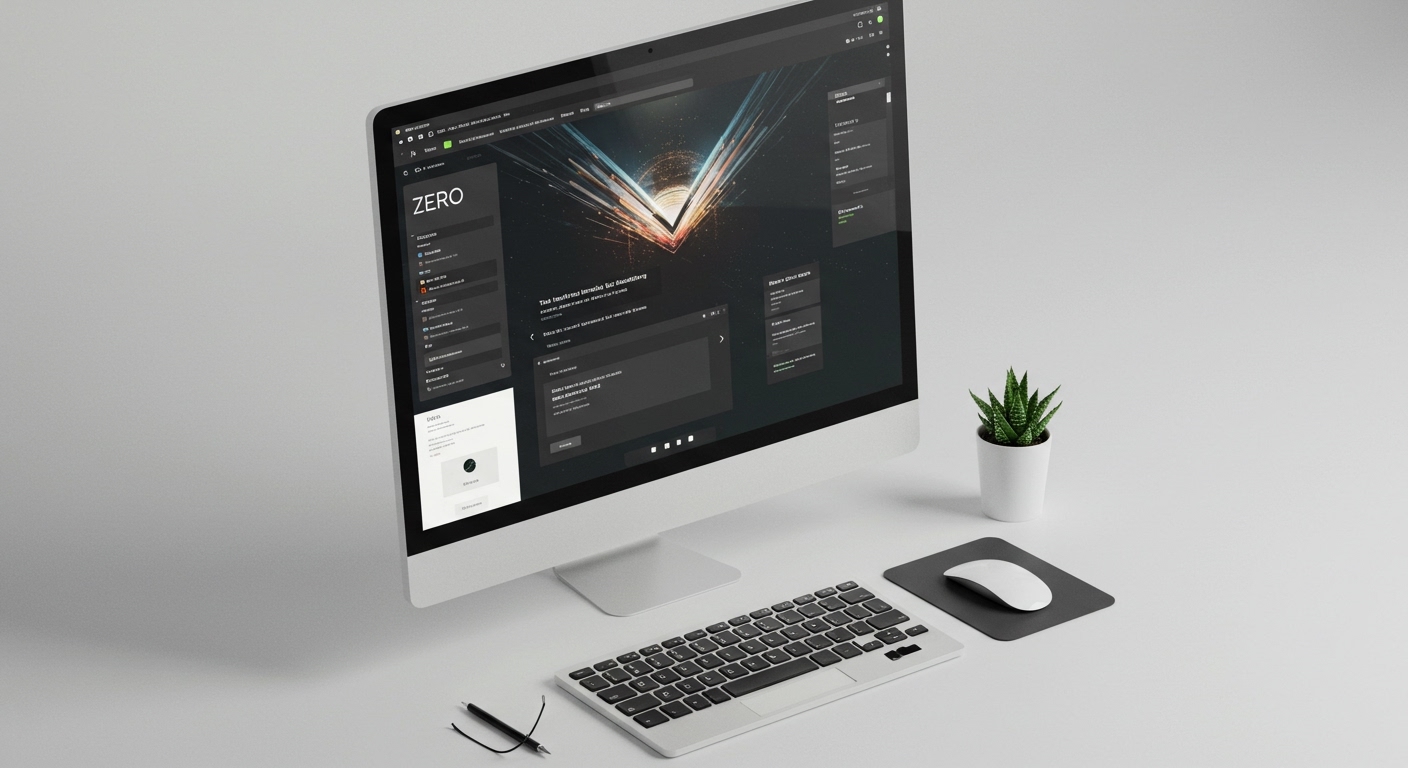
The technical breakdown of ZERO, an immersive scroll-driven WebGL experience, reveals a front-end craft that prioritizes deep browser understanding over convenience.
This detailed approach, also reflected in Unseen Studio’s commitment to transforming abstract ideas into memorable experiences, points to a growing trend. There is a clear industry undercurrent moving beyond component libraries and toward custom-engineered interactions, utilizing advanced web platform features like boundary-aware CSS and time-based web designs for precise layout and motion control. The Three.js Conference further solidifies this shift, indicating a broader embrace of complex visual narratives and rich interactive landscapes that demand sophisticated rendering and optimization techniques.

Unseen Studio exemplifies a perspective that challenges the prevailing industry emphasis on rapid deployment and standardized design systems. While many agencies lean on pre-built frameworks to deliver projects quickly, Unseen Studio dedicates itself to meticulously crafting unique digital experiences from abstract concepts. This requires a profound grasp of web typography, layout, and motion, pushing past generic solutions to build genuinely distinct interactions. The mainstream narrative often suggests that such bespoke craftsmanship is inefficient or too costly for most clients, advocating instead for speed and scalability through generic patterns. However, the quality and memorability of experiences like those hinted at by Unseen Studio demonstrate that deep craft delivers significant value, fostering user engagement that generic solutions cannot replicate.
The perceived “inefficiency” of custom front-end craft is a misconception; the technical rigor behind projects like ZERO illustrates that performance is not sacrificed. Instead, it is achieved through dedicated optimization of rendering pipelines and scroll-driven interactions, a level of detail often overlooked in quick-turnaround projects. A critical understanding of browser performance metrics and direct manipulation of properties like pointer-events, rather than solely relying on JavaScript frameworks, becomes paramount. This careful attention to the lowest layers of the web stack allows for highly performant and visually rich outcomes. By late 2027, the industry will acknowledge that true performance and design innovation stems from this deep foundational knowledge, moving beyond superficial metrics to value engineered efficiency in complex interactive designs.
This re-emergence of front-end craft directly contends with the widespread adoption of “no-code” and “low-code” platforms, alongside the pervasive influence of generic component libraries. These tools, while offering speed and accessibility, inherently abstract away the granular control necessary for truly distinctive and optimized web experiences. The resistance comes from the inertia of existing development workflows and the business pressure to deliver projects quickly with minimal investment in specialized front-end expertise.
A working Web Design professional should dedicate time this week to experiment directly with a new, less commonly used CSS property such as pointer-events or boundary-aware CSS in a minimal environment, understanding its precise browser behavior without any framework abstraction. This practice fosters a deeper intuition for core web mechanics.
TL;DR
The modern web requires profound front-end craft, leveraging deep technical understanding for performance and unique interactive experiences.
Curated References
About this editorial — This piece was developed using AI-assisted research and curation across multiple industry sources. All analysis, opinions, and predictions represent the editorial perspective of JHDD. Sources are linked in the references section above.