Julian’s Interior Insight — 2026.06.03

The meticulously curated interior is no longer merely a backdrop; it is an active participant in shaping our experience.
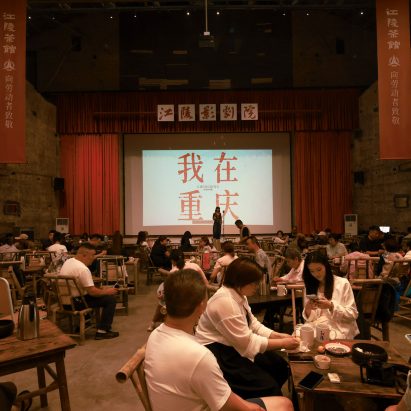
In an era where the digital realm relentlessly encroaches upon our physical presence, the tangible world of interior design has become a crucial anchor. We are witnessing a profound re-evaluation of materiality, a conscious move away from the ephemeral towards the enduring and the authentically tactile. This renewed appreciation for substance is not simply aesthetic; it is deeply embedded in how we navigate and interact with our environments. Spatial tension, once a purely architectural consideration, now informs the psychological comfort or unease we feel within a room. The deliberate manipulation of voids and solids, of light and shadow, creates dynamic narratives that guide human flow, encouraging contemplation, fostering connection, or facilitating focused activity. The five projects presented – a collaborative workspace in India, a cinematic teahouse in China, a boutique hotel in Mexico City, a creative office in Madrid, and a maximalist restaurant in Beverly Hills – collectively illustrate this powerful shift. They speak to a global desire for spaces that not only house function but also resonate with our innate need for sensory engagement and meaningful engagement with place.

The trend analysis reveals a fascinating dichotomy. On one hand, there is a clear yearning for authenticity and historical resonance, exemplified by the transformation of a 1950s Chinese cinema into a teahouse. Studio We Live has masterfully preserved the spirit of the original structure, weaving new life into its bones with a wooden canopy that respects, rather than erases, its past. This taps into a collective nostalgia, offering a refuge from the homogenizing force of contemporary construction. Concurrently, there is an undeniable embrace of curated, almost performative, cool. Mil Studios’ design for the Madrid office, drawing inspiration from 1990s New York, offers an “unmistakably cool working experience,” characterized by minimalist spaces and a refined material palette. This suggests a desire for environments that project a specific, aspirational identity, particularly within the competitive creative industries. The “humble and collaborative” ethos of Logic’s Indian workspace, with its brick arches and colourful glass, bridges these two inclinations, offering a grounded yet visually engaging environment. Similarly, PPAA’s Lamartine hotel in Mexico City, with its clever spatial solutions and natural illumination, achieves a discreet power, hinting at a sophisticated understatedness that is itself a form of luxury.
The inherent tension lies in the simultaneous pursuit of raw authenticity and polished, aspirational coolness. How does one reconcile the desire for the unvarnished, the historical, the seemingly ‘found,’ with the need for spaces that are undeniably chic, meticulously designed, and often highly curated to project a specific brand of success or creativity? The risk is that the “humble” can become performative, and the “cool” can devolve into sterile imitation. The Bad Roman Beverly Hills, with its “exuberant” tiled facade, pushes this boundary, opting for a bold, almost theatrical, maximalism that seems to revel in its own constructedness. This project, while undoubtedly impactful, stands in stark contrast to the more introspective approaches seen elsewhere, highlighting the spectrum of contemporary interior expression. The true artistry lies in navigating this duality, creating spaces that feel both grounded in their materiality and elevated by their design intent, avoiding the pitfalls of superficiality or pastiche.
Looking ahead, the singular defining characteristic of truly exceptional interiors will be their capacity for sensorial storytelling. Expect a significant surge in the integration of olfactory design, the deliberate use of ambient soundscapes, and the exploration of dynamic lighting systems that respond to human presence and natural cycles. Materiality will transcend mere aesthetics to become a core element of narrative, with architects and designers seeking out materials with inherent stories – salvaged elements, bio-based composites, and artisanal crafts that carry the imprint of human skill. The most covetable spaces will not simply be beautiful; they will be immersive experiences that engage all the senses, fostering a profound connection between the inhabitant and their environment, transforming utilitarian spaces into deeply personal havens of sensory richness and emotional resonance.
TL;DR
Interiors are becoming deeply experiential, blending historical resonance with curated coolness to engage our senses and shape our flow.