
JHDD UI UX Report — 2026.07.08

A senior designer at a major tech company recently described an AI model adding an unprompted search box with blur animation and accessibility features to a blog rewrite.
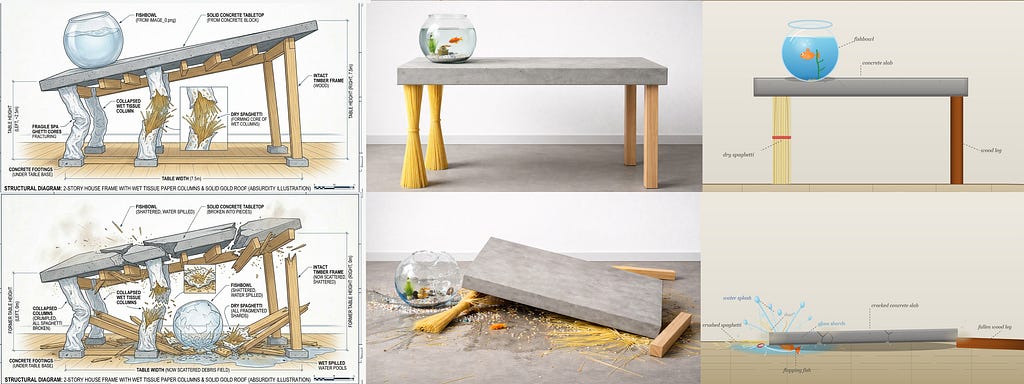
This event, alongside the introduction of Kirki’s infinite canvas for WordPress and the findings from MIT’s NANDA initiative, highlights a growing tension: design is increasingly offered “freedom” or “unprompted intelligence,” yet struggles to integrate these into coherent, human-centered systems. The inherent limitations of box-based builders are being challenged by tools like Kirki, while AI models demonstrate unexpected capabilities, sometimes even in accessibility. However, this emergent intelligence often lacks a structural understanding of user needs, mirroring the “shared structural absence” identified in the Spaghetti Table Protocol challenge. The pattern is one of fragmented innovation – powerful individual features or unbounded environments emerging without a clear, iterative framework for user validation and holistic integration.

The incident involving the senior designer at a major tech company, where an AI model generated a search box with accessibility features out of the box, reveals a critical misdirection in the industry’s perception of artificial intelligence. Conventional wisdom often praises such occurrences as AI demonstrating superior capability, a convenient shortcut to improved usability and accessibility. However, this perspective overlooks the underlying problem. An AI generating features unprompted, even “better” ones, signifies a bypass of the deliberate, iterative design process essential for truly robust and adaptable interaction patterns and design systems. This unprompted generation, while superficially impressive, removes the human designer from the crucial discovery and validation loop. It fosters a dependency on opaque algorithmic decisions rather than cultivating a deeper understanding of user needs and system architecture within the design team. The models can perform tasks, but they do not inherently understand the why or how of user interaction in the way a researcher or designer does.
This reliance on unprompted AI output can be detrimental. The MIT’s NANDA initiative observed that ninety-five percent of enterprise generative AI pilots failed to deliver measurable impact. This failure is directly linked to an inability to build software iteratively, a lesson Eric Ries articulated years ago in The Lean Startup. When AI delivers features without explicit human input, it resembles a large, upfront “big bet” on an unvalidated solution. Designers risk becoming integrators of AI outputs rather than architects of user experience, diminishing their capacity for critical user research and system-level thinking. Without careful iteration and validation, features like the AI-generated search box, while seemingly advanced, contribute to a design system that may not align with broader strategic goals or user behaviors discovered through primary research. If design teams continue to accept unprompted AI feature generation as a finished product, rather than a hypothesis, it will lead to an erosion of design system coherence and an increase in unvalidated interaction patterns across many enterprise applications by late-2027.
The primary resistance to adopting a more critical, iterative approach to AI-generated design elements comes from the enterprise mindset that Eric Ries critiqued. Enterprises often pour billions into generative AI programs, yet operate with a “one big bet” mentality, specifying projects upfront and shipping a year later without continuous learning. This organizational inertia prioritizes perceived speed and scale over the sustained, measurable impact that derives from iterative user research and design validation. The desire for quick, impressive AI demonstrations overshadows the discipline required for building truly effective and accessible systems.
A UI UX professional should, this week, treat every AI-generated feature, whether explicit or unprompted, not as a solution, but as a testable hypothesis. Instead of integrating it directly, dedicate resources to a rapid micro-experiment: conduct five brief usability tests or a single-variable A/B test comparing the AI-generated feature against a human-designed alternative or the existing pattern. Document the observed user behaviors and insights, using this data to inform iterative design decisions rather than passively accepting the AI’s output.
TL;DR
Unprompted AI design features require direct user validation, not passive acceptance, to build robust interaction patterns.
Curated References




About this editorial — This piece was developed using AI-assisted research and curation across multiple industry sources. All analysis, opinions, and predictions represent the editorial perspective of JHDD. Sources are linked in the references section above.