JHDD Interior Report — 2026.06.30
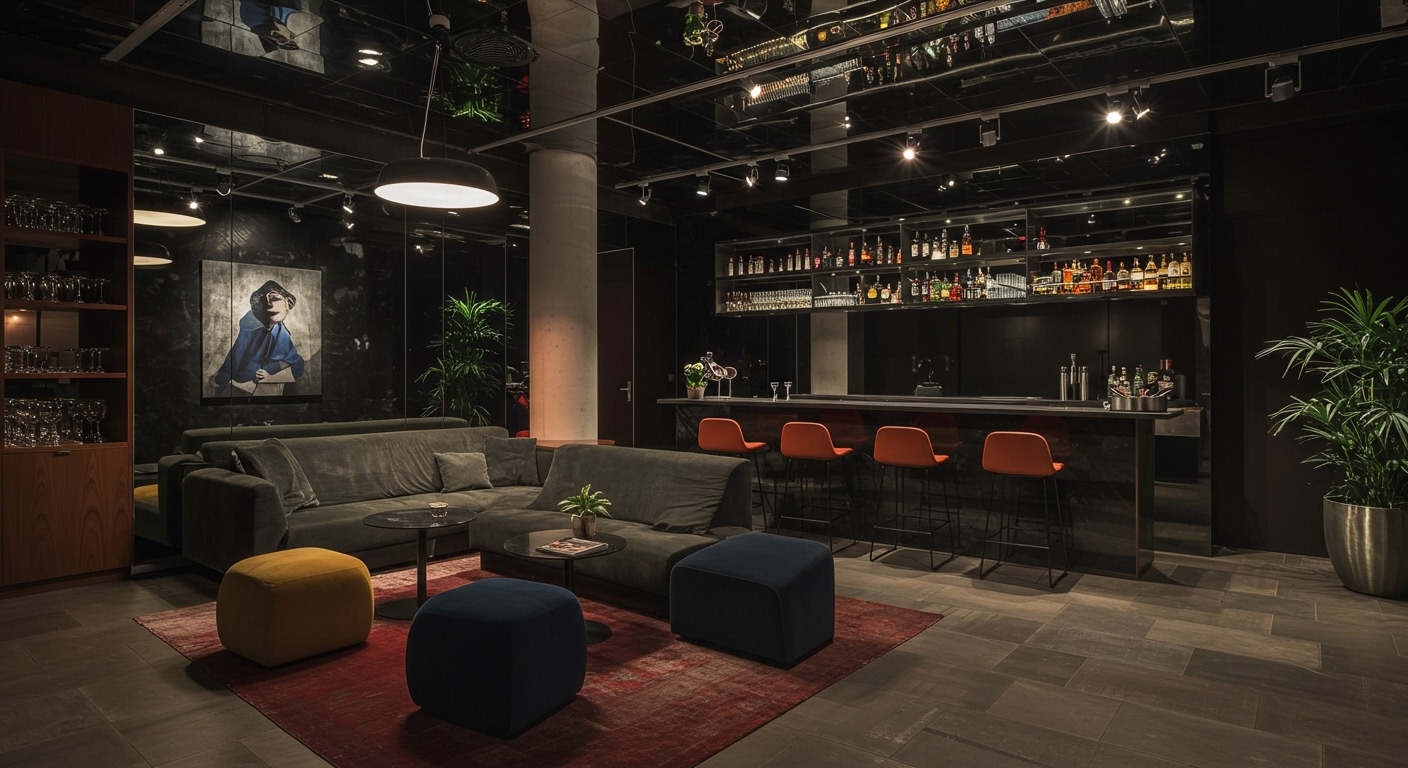
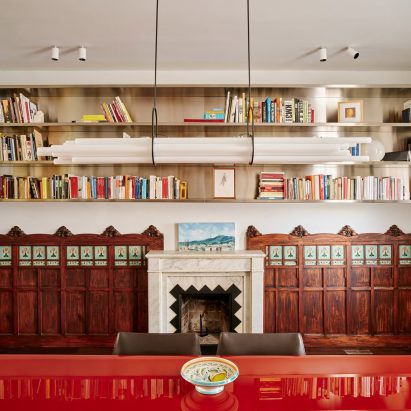
Fabio Fantolino’s Lève Office Bar in Turin features mirror-clad surfaces that reflect a deliberate manipulation of spatial perception.
A consistent pattern across recent hospitality and residential projects is a calculated departure from minimalist homogeneity towards layered, tactile environments that challenge spatial linearity. This is not simply a revival of past aesthetics but a complex re-interpretation of historical references, generating new forms of spatial tension and human flow. These designs prioritize immersive, nuanced experiences over overt statements.
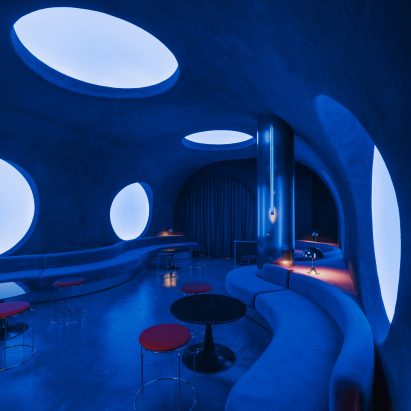
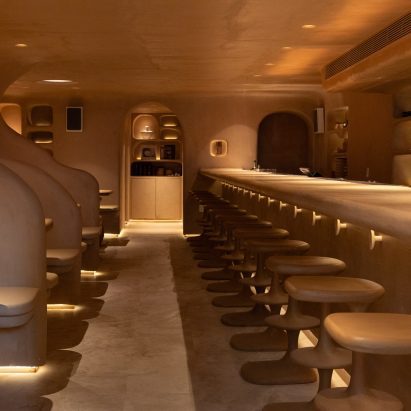
Wild Form Design Studio’s work on Love Thy Neighbor offers a pertinent example of this shift. Their stated approach of “no straight lines” translates into a sculptural interior that actively discourages conventional, efficient circulation. Mainstream industry opinion often champions clear sightlines and predictable movement patterns in commercial spaces. However, Love Thy Neighbor deliberately introduces a softened, undulating topology that encourages slower, more exploratory navigation. The tactile quality implied by the absence of sharp edges creates a sense of enveloping intimacy rather than open expanse. This design cultivates spatial tension by blurring traditional boundaries and inviting physical interaction with the environment itself, rather than merely passing through it. Wild Form Studio’s emphasis on organic forms in a space celebrating the queer community suggests that spatial ambiguity can foster inclusivity by subverting rigid visual cues. Within the next two years, luxury residential projects will increasingly adopt softened, non-linear circulation paths, informed by this principle of gentle disruption.
The prevailing notion that “retro-futurism” or “mid-century modern” is primarily about aesthetic nostalgia misses a crucial point in current practice. Projects like Focacha by Isern Serra, which draws from Verner Panton’s multi-coloured modular furniture, are not merely recreating historical styles. Instead, they extract specific material and volumetric principles from the past to generate new forms of tactile engagement and spatial tension. The modularity, for instance, allows for a dynamic interplay of solids and voids that prevents the space from feeling static. The true innovation lies in the subtle recalibration of scale and texture, often at a micro-level, to create a sense of discovery that pure replication cannot achieve. This is less about visual recall and more about a deeper somatic experience within the space.
The primary resistance to this tactile, non-linear design philosophy comes from value engineering models prevalent in large-scale commercial development. These models prioritize speed of construction, ease of maintenance, and replicable components. Such approaches inherently favour orthogonal geometries and standardized material applications, often reducing interior design to a surface treatment rather than a spatial intervention.
Interior professionals should analyze their current material palettes for opportunities to introduce at least one non-standard texture or form. This could be applied even in a small architectural detail or a bespoke furniture piece, explicitly designed to encourage a moment of pause or tactile interaction, moving beyond purely visual appeal.
TL;DR
Design prioritizes human flow and tactile experience through reinterpreted material and volumetric tension.
Curated References

About this editorial — This piece was developed using AI-assisted research and curation across multiple industry sources. All analysis, opinions, and predictions represent the editorial perspective of JHDD. Sources are linked in the references section above.