
JHDD UI UX Report — 2026.07.09

Kirki, the freeform visual builder for WordPress, introduces an infinite canvas, promising full design freedom.
This push for unbounded creation, however, obscures a pervasive, unspoken challenge to the traditional locus of design authority. Recent developments reveal that design control is increasingly being fragmented and redistributed across emergent AI capabilities, non-human stakeholders like compliance teams, and the inherent structures of new creative tools. This distribution fundamentally redefines where design decisions originate and how they are enacted.

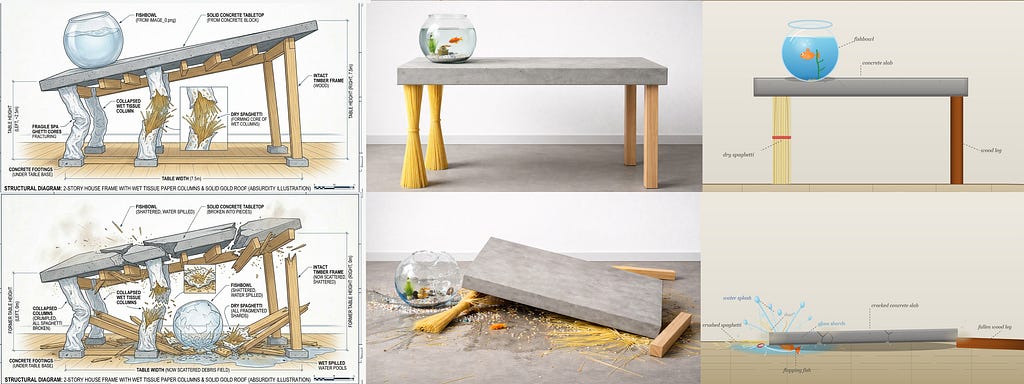
The industry frequently frames tools offering “full design freedom,” like Kirki’s infinite canvas, as unequivocally positive advancements, liberating designers from prior limitations. This perspective, however, overlooks a critical shift. When AI models, such as those evaluated under the Spaghetti Table Protocol where GPT-4o, Gemini 1.5 Pro, and Claude 3.5 Sonnet scored an aggregate 4/30, can generate unprompted but superior accessibility features for a search box, the designer’s role transitions from primary creator to editor of an automated suggestion. The conventional wisdom suggests this frees designers for higher-level strategic thinking, but it simultaneously dilutes the designer’s original intent and reduces the tangible impact of their craft. The perceived freedom often implies an acceptance of an AI-generated baseline, rather than true, unconstrained creation from first principles driven by deep user understanding.
The “crisis of the what” extends beyond AI taking over technical execution; it highlights a subtle erosion of the designer’s foundational judgment. While a product designer with no technical background used Claude to build an agent and pushed it to GitHub, demonstrating AI’s power to democratize technical capability, this also signals a future where the “what” is shaped by algorithmic probability rather than human-centered intuition built through experience. By mid-2028, designers will increasingly find themselves defining constraints for AI’s creative latitude, rather than building user flows from scratch, shifting the core interaction pattern from direct creation to meta-design and prompt engineering. This will demand a more sophisticated understanding of ethical AI, algorithmic bias, and the nuances of human behavior as core competencies within UX research, influencing how design systems are conceived and governed.
This redefinition of design authority faces resistance from deeply ingrained industry structures, particularly in regulated industries like fintech or insurance. Here, compliance and legal teams act as immutable co-authors of design briefs, overriding user research and clean user flows with mandated changes. This environment resists the fluid, AI-driven generation of features or the unbounded freedom of an infinite canvas, grounding design in strict legal and user protection requirements that supersede algorithmic convenience or unbridled creative expression. The necessity of rigorous, human-reviewed adherence to standards remains a powerful counterpoint to unchecked automation.
To navigate this evolving landscape, UI UX professionals should begin conducting weekly “AI co-authorship audits” on their current projects. Select a core user flow or component, explicitly articulate what an AI model (e.g., GPT-4o or Claude 3.5 Sonnet) might autonomously generate for it, then compare that output against current design system guidelines, accessibility standards, and legal compliance documentation. This exercise forces designers to identify where algorithmic suggestions align with or diverge from established standards, and where human judgment, based on intuition with scars, remains indispensable for ensuring usability and ethical adherence. This proactive audit builds the “judgment through experience” needed to effectively manage AI co-authorship and refine interaction patterns for optimal human-AI collaboration.
TL;DR
Design authority is fragmenting, shifting from human intent to a blend of AI generation, regulatory mandates, and tool limitations.
Curated References



About this editorial — This piece was developed using AI-assisted research and curation across multiple industry sources. All analysis, opinions, and predictions represent the editorial perspective of JHDD. Sources are linked in the references section above.