JHDD Interior Report — 2026.10.18
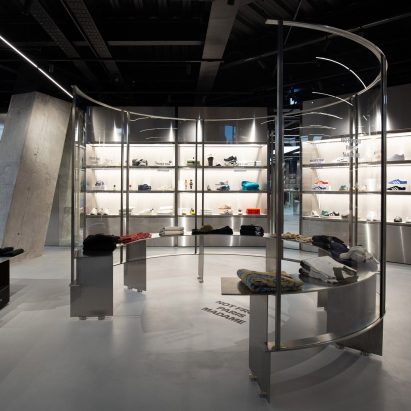
Didea’s Super F streetwear store in Malta exhibits a design philosophy that integrates a flexible, modular grid within an existing, architecturally significant structure.
This approach highlights a subtle but persistent pattern across recent projects: a calculated re-engagement with pre-existing spatial envelopes, where interior interventions adopt a rigorous, often modular, discipline. This is not mere adaptation; it signifies a conscious decision to design into a space with systems that define flow and tactile interaction, rather than simply filling it. Designers are deliberately embracing the constraints of modularity and a structured material palette to create new forms of spatial tension and human engagement.
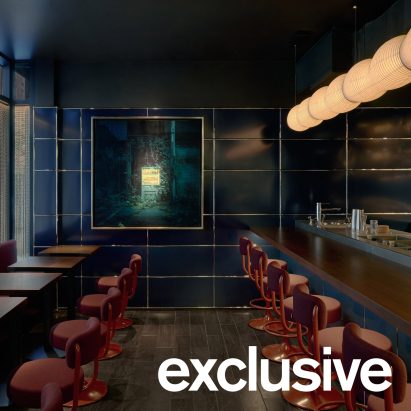
Consider Josh Greenspan’s VV’s Cocktail Room in Manhattan, where the interior is almost entirely clad in Steel Blue USM Haller modular shelving. Mainstream design commentary often praises such applications for their minimalist aesthetic or efficient use of space. However, this view misses the point entirely. The true strength of specifying a system like USM Haller lies in how its inherent rigidity and precise geometry force a profound reconsideration of spatial tension. Every joint, every panel, every repeated unit in VV’s Cocktail Room establishes a tactile rhythm and visual constraint that shapes human flow and encourages a specific, measured interaction with the environment. It transforms the space into a highly structured experience, where the cool steel and precise alignment are not neutral backdrops but active participants in the room’s atmosphere. This disciplined application, far from being simply functional, generates a quiet authority that allows for intimate social dynamics to unfold within its strictures.
This calculated use of structured systems contradicts the conventional wisdom that bespoke, organic forms are inherently superior for creating engaging, luxurious interiors. When handled with precision, the repetitive, unyielding nature of modular components, especially those with distinct material properties, can generate a more intense and memorable tactile quality than sprawling custom builds. The challenge shifts from unconstrained creation to masterful orchestration within a fixed vocabulary. Within two years, this strategic deployment of modular systems will become a signature for luxury hospitality, as clients demand spaces that offer both refined aesthetics and an almost palpable spatial discipline, prioritizing sophisticated tactile experiences over visual extravagance.
This disciplined approach faces resistance from clients and developers who prioritize speed and low upfront cost over the deep, considered integration of system design. They often perceive modularity as a cost-cutting measure or a purely utilitarian choice, neglecting its potential for elevated spatial definition and sophisticated material dialogue.
Interior professionals should, this week, actively evaluate modular systems not merely for their visual appeal or cost-efficiency, but for the inherent spatial tension they can introduce. Examine how joints connect, how materials reflect light, and how the repetition of elements affects sound and human movement, prioritizing the subtle, sensory impact over immediate visual gratification.
TL;DR
Interior design is emphasizing structured modularity and material discipline to create nuanced spatial tension and tactile experiences.
Curated References
About this editorial — This piece was developed using AI-assisted research and curation across multiple industry sources. All analysis, opinions, and predictions represent the editorial perspective of JHDD. Sources are linked in the references section above.