JHDD Architecture Report — 2026.10.03
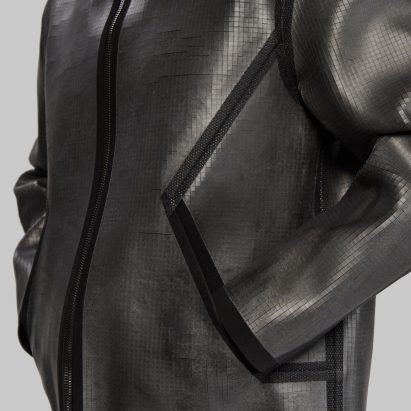
Vollebak’s Rock Jacket, with its 54,000 slate tiles, exemplifies an intense focus on single-material durability within design.
Across various scales, from a disposable cup to an alpine viewpoint, a nuanced re-evaluation of material value and the inherent responsibilities of construction is underway. The individual articles reveal a fragmented but consistent drive towards design that is deeply embedded in its context, prioritizing material honesty, and demonstrating a clear, tangible lifecycle beyond initial use, whether through composting, long-term resilience, or urban integration. This pattern suggests a shift from seeking merely “green” alternatives to demanding fundamental shifts in material specification and assembly.
The experimental clothing brand Vollebak’s approach with the Rock Jacket challenges conventional thinking about sustainable material innovation. While mainstream architectural discourse often champions lightweight composites or engineered timber for their efficiency and reduced material volume, Vollebak invests in the deliberate, layered application of thousands of small, robust, natural components. This emphasis on intrinsic material properties, assembled in an intensive rather than minimalist manner, offers a counterpoint to the prevailing push for homogeneity and swift assembly. It suggests that true material honesty can reside in the specific, tangible accumulation of natural elements, prioritizing resilience and eventual deconstruction over perceived efficiency. By embracing a material like slate in such abundance, Vollebak forces a reconsideration of “resource-intensive” as potentially “longevity-intensive” and “disassembly-friendly,” if the material remains pure. The impact of such material exploration is not limited to garments; by mid-2027, the architectural sector will begin seeing more pilot projects that incorporate dense, single-material assemblies, exploring their thermal performance, acoustic properties, and extended lifecycles, moving beyond a sole reliance on composite panels.
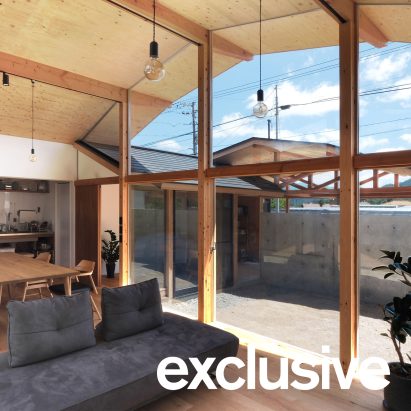
This re-examination extends to how materials interact with their urban or natural context. Snøhetta’s Lech Mountain Mirror, for instance, uses a shallow reflective pool to merge with the alpine landscape, while Enter-Archi’s House in Yakami adapts its broken-pitch roof to manage heavy snow and maximize specific mountain views. These projects, much like the call for submissions for the Rogelio Salmona Latin American Architecture Prize, underscore the importance of architecture that is responsive to its immediate environment and contributes positively to collective life. The prize specifically seeks works built between 2010 and 2020 that transform social surroundings through open spaces and connections to the city. This reinforces the idea that material and structural philosophy cannot be detached from their urban or ecological responsibilities.
The primary force opposing this shift is the inertia of established construction logistics and economic models. The prevailing industry culture prioritizes speed, standardized mass production, and cost-efficiency over the bespoke craftsmanship, local material sourcing, and intensive assembly implied by these innovations. Existing supply chains are geared towards easily replicable, often composite, materials rather than systems that accommodate high volumes of single-material elements or require local artisan input. This industrial-scale efficiency frequently disincentivizes deeper engagement with material origins and end-of-life cycles.
A working architecture professional should immediately initiate a “single-material disassemblability audit” for a current project. Identify every multi-material composite element in the design – wall panels, roofing systems, flooring – and document its individual components and their end-of-life implications. For at least 15% of these elements, research and propose a high-durability, single-material alternative that is locally sourced, easily repairable, and directly reusable or compostable without complex industrial processing, similar to Nothing’s water-based coating for cups.
TL;DR
Material exploration is shifting from composite efficiency to durable, disassemblable, and contextually honest single-material solutions.
Curated References


About this editorial — This piece was developed using AI-assisted research and curation across multiple industry sources. All analysis, opinions, and predictions represent the editorial perspective of JHDD. Sources are linked in the references section above.