JHDD Architecture Report — 2026.09.26
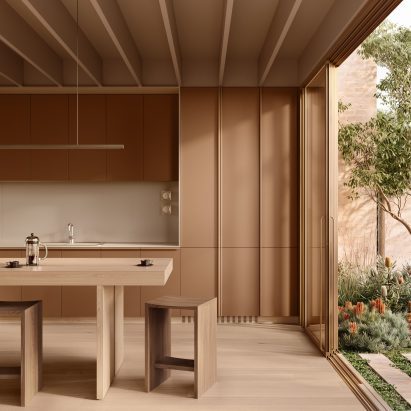
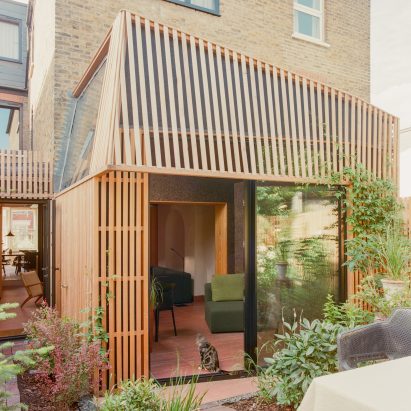
Polysmiths’ renovation of Pine House in London, utilizing lime-plastered brickwork and cork panels, exemplifies a growing architectural commitment to inherent material qualities.
The pattern across these recent reports indicates a renewed focus on the physical and the pre-existing. Bricolo Falsarella’s restoration of the 1800s farmhouse for Corte Renèe Resort, along with the continued legacy work of Moneo Brock across diverse urban projects spanning Spain, Mexico, Colombia, and the Dominican Republic, highlights how design value is increasingly found in sensitive intervention within established contexts. Even Laminex’s 2027 Colour Collection, drawing directly from specific Australian landscapes such as the deep ochre of ‘Red Centre’, proposes a material palette rooted in tangible geographic reality rather than abstract trends. This collective shift suggests a deeper material consciousness.
The work of Polysmiths on Pine House in Peckham offers a clear case study. Charles Wu’s approach, capturing changing light through deliberately chosen surface materials like timber boards and lime-plaster, prioritizes the sensory experience of a dwelling over purely aesthetic gestures. This stands in direct contrast to the mainstream industry opinion that often views renovation of existing structures as secondary or financially inferior to new construction. The prevailing developer mentality frequently dismisses the structural integrity and embedded cultural value of older buildings, instead favoring demolition and ground-up development for perceived efficiency or higher returns. This approach leads to significant material waste and neglects the embodied energy within existing edifices, creating unnecessary carbon loads. Such a view overlooks the inherent sustainability in adaptive reuse, the reduced carbon footprint from material conservation, and the rich experiential quality that comes from working with a site’s existing narrative and material palette. True innovation lies not in inventing newness for its own sake, but in finding profound relevance within what already exists and enhancing it responsibly.
Polysmiths demonstrates that responsible urban intervention can unlock new value by enhancing existing conditions rather than replacing them. This philosophical commitment to material honesty and contextual integration is more than a fleeting trend; it represents a fundamental shift in understanding built value. By mid-2027, the demand for specialized architectural firms proficient in deep material forensics and heritage-sensitive adaptation will significantly increase, particularly as cities grapple with aging infrastructure and climate mandates. This will lead to a demonstrable decline in speculative demolition permits for structurally sound older buildings in major European and North American urban centers, as their intrinsic value becomes undeniable to investors and policymakers alike.
This movement towards material grounding faces direct opposition from the technological push represented by Meta and its Muse Charm device. Alan Dye’s design team is developing a portable AI agent that emphasizes a virtual, customizable experience disconnected from physical space and material reality. This increasing focus on digital avatars and mediated interaction encourages a detachment from tangible environments, potentially diverting investment and creative energy away from the complexities of real-world urban development and into entirely virtual ‘places.’ The allure of infinite digital customization often overshadows the finite resources and shared public responsibilities inherent in shaping the built environment.
An architecture professional can immediately implement a rigorous “material provenance audit” for every new project, especially renovations. This involves researching the origin and composition of existing building materials, identifying local craftspeople capable of working with traditional elements, and exploring on-site material reclamation strategies before specifying new components. This approach shifts design thinking from purely additive newness to intelligently subtractive and regeneratively adaptive practice, demanding a deeper understanding of the existing built environment.
TL;DR
Design is increasingly valuing site-specific material honesty and adaptive reuse over novelty.
Curated References

About this editorial — This piece was developed using AI-assisted research and curation across multiple industry sources. All analysis, opinions, and predictions represent the editorial perspective of JHDD. Sources are linked in the references section above.