JHDD Architecture Report — 2026.09.04
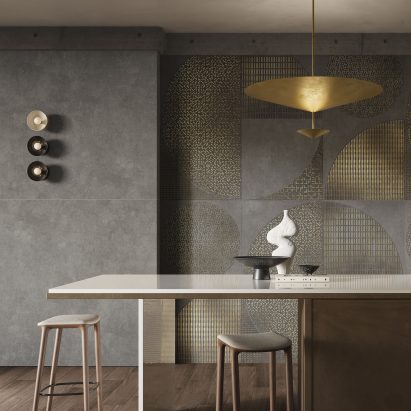
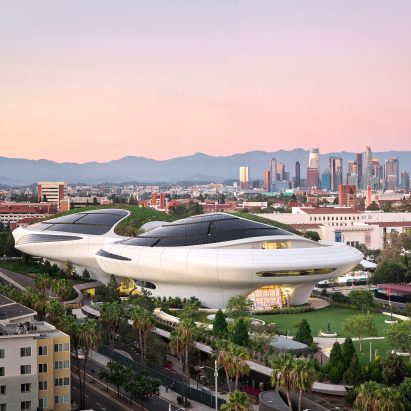
MAD’s Lucas Museum of Narrative Art will open later this month with over 1,200 curved panels forming its ‘dream-like’ exterior near Los Angeles’ Exposition Park. This focus on intricate surface articulation, echoed by the painterly textures of Casalgrande Padana’s Imagina Abstract tiles, points to a broader pattern: an industry increasingly fascinated by superficial spectacle and visual effect, often at the expense of deeper material honesty and integrated urban responsibility. These approaches prioritize image and immediate aesthetic impact over the long-term lifecycle, embedded energy, and contextual responsiveness of the built environment.
The design of the Lucas Museum of Narrative Art, with its extensive use of bespoke, curved panels, exemplifies a prevalent structural philosophy that prioritizes sculptural form above all else. While celebrated for its visual novelty and engineering complexity, this approach often necessitates unique fabrication processes and complex material assemblies that are inherently resource-intensive. Industry opinion often lauds such projects as pushing the boundaries of architectural expression; however, this perspective overlooks the inherent unsustainability of creating one-off, non-standardized components that resist easy deconstruction or material recovery. By mid-2028, the financial and environmental liabilities associated with maintaining these highly bespoke facades will become a significant point of scrutiny for institutional clients.
This studio’s work, while visually striking, reflects a detachment from the urban fabric beyond its immediate site. A more responsible approach would be to integrate new structures with material choices and forms that respond to and enrich the existing context, rather than presenting a self-contained, object-like statement. The emphasis on “dream-like” aesthetics, while appealing, can inadvertently create structures that ignore the material palette, construction methods, and social history of their surroundings, promoting a placeless architecture that relies on globalized manufacturing chains for its specialized components.
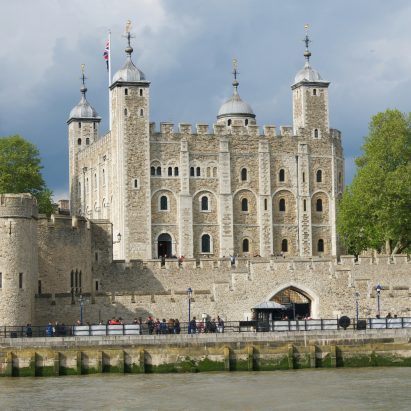
This trajectory, focusing on novel surfaces and detached forms, faces concrete opposition from established guardians of urban and historical integrity. Historic England, in its dispute with the City of London over the City Plan 2040, clearly advocates for preserving “clear sky” around the Tower of London. This stance represents a critical resistance to unchecked development that prioritizes commercial density or singular architectural statements over the historic urban landscape and its legibility. It is a necessary counterbalance to the impulse for visual dominance.
Architecture professionals should take a crucial step this week by conducting an honest material audit on an ongoing project. This involves critically assessing every proposed material specification not just for its aesthetic or immediate performance, but for its embodied carbon, its end-of-life plan, and its local sourcing potential. Instead of defaulting to novel cladding systems, consider how existing materials on site, much like the masonry structure of the “Barracão” redeveloped by José Adrião Arquitetos, can be celebrated or adaptively reused, allowing their inherent properties and history to inform the final design.
TL;DR
The industry must move beyond surface spectacle to genuinely integrate material honesty and urban responsibility into structural and design decisions.
Curated References

About this editorial — This piece was developed using AI-assisted research and curation across multiple industry sources. All analysis, opinions, and predictions represent the editorial perspective of JHDD. Sources are linked in the references section above.