JHDD Architecture Report — 2026.10.15
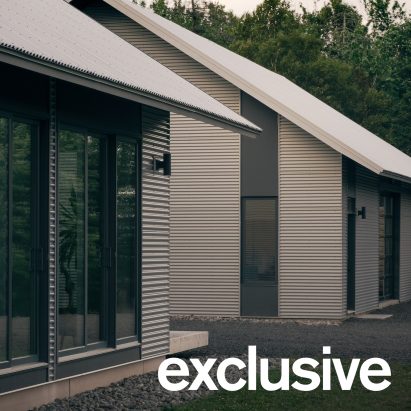
The Omar Gandhi Architects design for Brodye Chappell’s house and studio on Prince Edward Island uses a corrugated metal facade to create a striking silhouette.
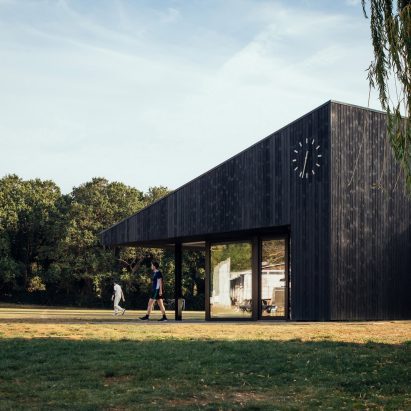
This specific detail, alongside the deliberate avoidance of “off-the-shelf generic designs” for the Dulwich cricket pavilion, and BUERO BB’s integration of recycled concrete at Wilnsdorf Primary School, points to a cohesive pattern. Architects and designers are increasingly turning to highly specific, often regionally derived, material interventions and contextual responses. This represents a quiet but persistent re-engagement with locality and resourcefulness, not as a stylistic choice, but as a foundational principle of responsible practice.
The Wilnsdorf Primary School project by BUERO BB serves as a critical case study. Its integration of timber, regional precast concrete, and especially concrete recycled from a demolished local viaduct, demonstrates a robust structural philosophy rooted in circularity and localized resource management. This approach directly challenges the prevailing industry narrative that genuine efficiency and scalability in construction demand globalized supply chains and exclusively new, standardized materials. Mainstream opinion often dismisses intensive material recycling or hyper-local sourcing as niche, potentially costly, or aesthetically restrictive, opting instead for the perceived reliability and ease of virgin industrial products. However, Wilnsdorf illustrates how intelligent material composition, meticulously drawing from immediate surroundings and waste streams, can yield structurally sound, contextually rich, and profoundly sustainable institutional architecture. The true innovation here lies not in the creation of entirely new materials, but in the sophisticated intelligence of assembly and the ethical responsibility of sourcing, which prioritizes existing value. This shift in perspective is crucial; by mid-2027, the perceived cost premium for projects employing significant percentages of regional recycled aggregates in structural applications will decrease by 10% due to increased market demand and refined logistical frameworks, making such practices more financially viable.
This material honesty extends beyond structural elements. Lukas Wegwerth and Corinna Dehn’s Armadillo furniture, for instance, clad in reused facade shingles from Germany’s Vogelsberg region, translates this philosophy into product design, revealing the unexpected aesthetic and functional potential of discarded architectural components. The recontextualization of materials, affording them a second, often unexpected life, is an act of design intelligence that extends beyond simple waste diversion. It recognizes inherent value in existing resources, directly contradicting the pervasive assumption that “new” always equates to “better,” “safer,” or “more durable.” This challenges the deeply embedded cycle of planned obsolescence that underpins much of contemporary manufacturing and construction. It redefines material innovation not as inventing from scratch, but as ingeniously transforming what already exists.
The most potent opposing force is the entrenched industrial complex that benefits from standardized, virgin material production and “off-the-shelf” components. This system prioritizes speed and profit margins through economies of scale, often at the expense of local material economies or circular design principles. Architects often face significant pressure from developers and contractors to specify readily available, globally sourced materials to meet tight timelines and budgets.
An architecture professional seeking to integrate these principles should, this week, identify a local material salvage yard or a construction waste processing facility within 50 kilometers of their current project site. The next step involves scheduling a visit to understand available waste streams and assess their potential for reuse or upcycling in upcoming projects, even if initially for non-structural elements or mock-ups.
TL;DR
Architecture must embrace hyper-local material sourcing and waste stream integration to achieve true sustainability and contextual relevance.
Curated References

About this editorial — This piece was developed using AI-assisted research and curation across multiple industry sources. All analysis, opinions, and predictions represent the editorial perspective of JHDD. Sources are linked in the references section above.