JHDD Packaging Report — 2026.10.04
Eye Coffee provides a single-serve pour-over made from compostable materials, solving convenience and ecological concerns simultaneously.
This approach, seen across recent projects, emphasizes an experience where the product’s function and its specific cultural context are elevated through precise, emotionally resonant design. It moves beyond generic aesthetic trends to embed specific utility, heritage, or playful identity directly into the packaging form and graphics. The focus shifts to how packaging enables a specific desired interaction rather than merely containing a product, impacting both the initial shelf impression and the unboxing experience.
The work by ImaginaryFriend for MATCHALITA, pairing Japanese visuals with electric color and waveform graphics, offers a clear example of this shift. Instead of relying on a conventional “luxury” aesthetic for ceremonial matcha, the design creates a fresh cultural context suitable for creative nightlife. This directly contradicts the prevailing industry belief that premium products must maintain a subdued, often minimalist, visual language to convey sophistication. Such an approach demonstrates that authentic cultural expression, even when bold and unexpected, can resonate more deeply and broaden market appeal than a strict adherence to perceived upscale norms. This redefinition of “premium” through cultural specificity and visual exuberance will become a core differentiator for discerning brands in crowded markets, demanding a more nuanced understanding of aesthetic impact on the shelf.
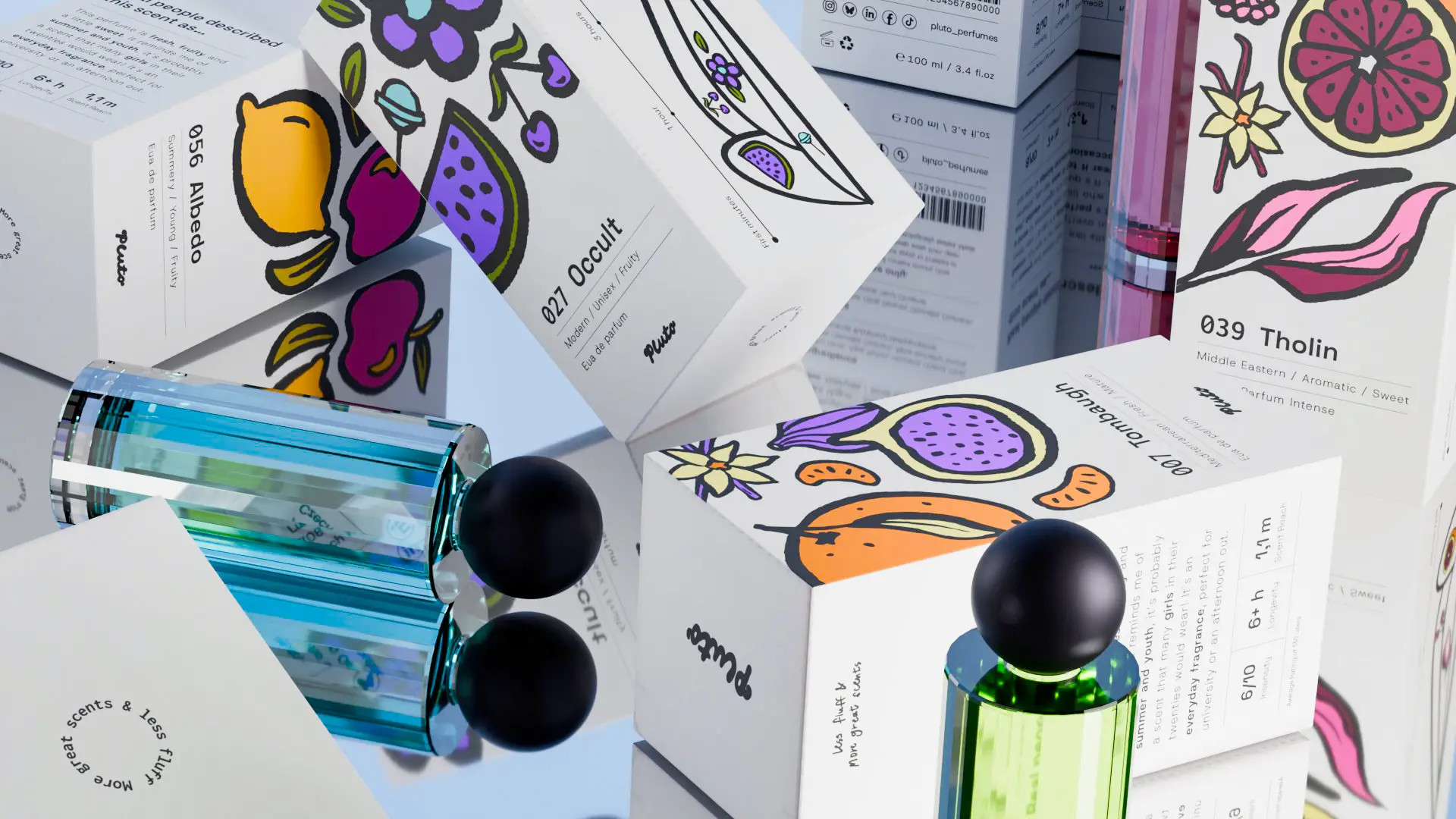
Similarly, Kateřina Milatová’s Pluto project for fragrance, utilizing clear illustrations to describe products, makes the offerings more accessible and understandable, challenging the notion that fragrance packaging must remain abstract or aspirational to convey allure. Here, the packaging itself becomes an educational tool, demystifying a category often shrouded in enigma. This indicates that direct, functional communication, even for experiential products, can forge a stronger emotional connection and reduce perceived barriers to entry for new consumers. Expect to see brands increasingly prioritize this direct narrative approach over cryptic branding, leading to a measurable increase in category cross-pollination within the beauty sector by early 2028, as brands seek innovative ways to explain complex products simply and engage broader audiences.
This movement towards hyper-specific, culturally-driven, and utility-embedded design is often resisted by risk-averse corporate structures and established marketing departments. These entities frequently favor broad appeal, proven templates, and a fear of alienating a perceived mainstream audience, leading to diluted designs that lack distinctiveness. The reliance on generalized market research, which often struggles to capture nuanced cultural shifts, further reinforces this resistance to bolder, more targeted creative directions.
A working packaging professional should actively seek out and integrate specific cultural touchstones and micro-community aesthetics into their designs, moving beyond universalized branding guides. This means deeper immersion into target subcultures to understand their visual language and values, rather than relying on generalized demographic data.
TL;DR
Packaging must evolve beyond generic trends by integrating specific cultural narratives and utility-driven design.
Curated References



About this editorial — This piece was developed using AI-assisted research and curation across multiple industry sources. All analysis, opinions, and predictions represent the editorial perspective of JHDD. Sources are linked in the references section above.