JHDD Interior Report — 2026.09.23
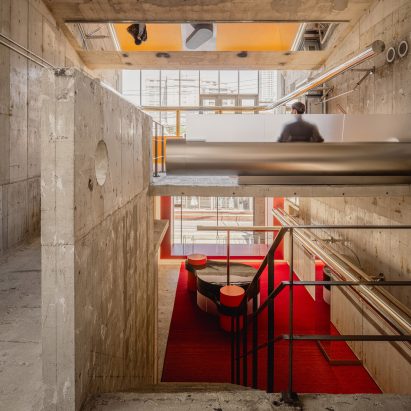
I IN’s design for the Andersson Bell store in Tokyo juxtaposes original exposed concrete with new glossy, reflective surfaces. This approach, alongside other recent projects, reveals a deeper pattern: a pronounced shift towards spatial experiences defined by immediate physical interaction and authentic material presence, moving beyond purely visual spectacle. It signifies a collective impulse to ground occupants in tangible environments through texture, movement, and a deliberate engagement of the senses.
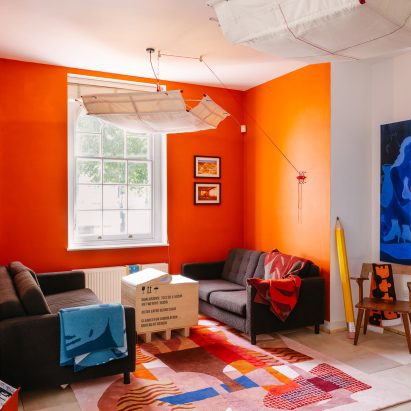
The University of the Arts London’s transformation of the Atterbury Flat into a student design archive exemplifies this immersion, allowing visitors to eat, sleep, and bathe amidst curated works. This concept of total habitation, where design is not merely observed but lived within, represents a significant divergence from the mainstream industry’s often superficial interpretation of “experiential design.” Many contemporary projects mistake Instagrammable moments or digital overlays for genuine spatial engagement, failing to foster a profound physical connection between human and environment. Ellie Foster correctly critiques this trend, observing that “neurodiverse design is a marketing ploy” too often, a cosmetic application rather than an integrated spatial solution. True spatial tension and human flow emerge from honest materiality and thoughtful interaction, not from a branded veneer. By mid-2027, the industry will pivot towards commissions that prioritize integrated kinetic elements and adaptive material systems, ensuring physical spaces respond and evolve with occupant presence.
The opposing force is the pervasive commercial pressure to deliver quickly consumable, visually trending spaces. This pressure often manifests as a reliance on easily replicable finishes and pre-packaged sensory themes that lack specific material depth or genuine understanding of human interaction. The desire for immediate marketability frequently overrides the slower, more considered process required to develop truly tactile or dynamically responsive environments.
Interior professionals should, this week, re-evaluate their material specifications, actively seeking out and presenting options that celebrate inherent material qualities rather than obscuring them with applied finishes. Prioritize materials whose grain, reflection, or thermal properties can be directly perceived and interacted with, prompting a more direct sensory engagement for the client and eventual occupant.
TL;DR
Genuine spatial experience relies on direct material interaction and physical engagement, not superficial aesthetics.
Curated References


About this editorial — This piece was developed using AI-assisted research and curation across multiple industry sources. All analysis, opinions, and predictions represent the editorial perspective of JHDD. Sources are linked in the references section above.