JHDD Architecture Report — 2026.09.22
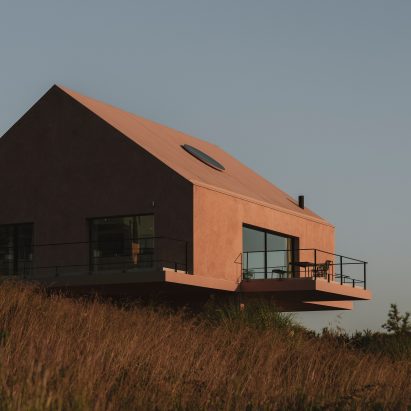
Skovsporet 3D-Printed Student Housing in Holstebro, Denmark, deploys large-scale 3D printing across an entire residential development.
This project, alongside the adaptive transformation of the Atterbury Flat by UAL into a student design archive, points to a broader, unspoken tension in contemporary architecture: the pursuit of construction efficiency versus the imperative of contextual and material longevity. The news cycle tends to highlight singular advances or programmatic transformations, yet the underlying shift is towards an architecture that must perform multiple, often contradictory, roles simultaneously within existing urban fabrics, engaging both social memory and urgent functional needs, or rapidly deployable new ones.
While the mainstream narrative celebrates 3D printing, as demonstrated by SAGA Space Architects with Skovsporet, for its speed and potential for complex geometries, it often sidesteps a rigorous examination of the printed material’s long-term performance, repairability, and genuine carbon footprint in a lifecycle assessment. This enthusiasm, often driven by perceived cost savings and rapid deployment, risks prioritizing initial delivery over embedded resilience and material honesty that endures for generations. This challenges the common assumption that any technological leap automatically translates to sustainable progress without deep material science scrutiny and responsible urban integration strategy.
The Dezeen Awards 2026 shortlist, featuring projects from 36 countries, reflects a global embrace of diverse architectural expressions, yet often the underlying material compositions and structural philosophies are implicitly assumed to be robust. Projects recognized for form or programmatic innovation often receive less scrutiny for their true material provenance or end-of-life implications. By mid-2028, a new industry standard will emerge, not merely for carbon reporting, but for a comprehensive ‘material obsolescence index’ for every major building component, forcing designers to confront the temporal lifespan of their specifications. This will shift the focus from initial construction efficiency to perennial material performance.
The pressure from developers and political figures, as exemplified by Donald Trump’s abrupt re-designation of the Harrison Design triumphal arch into a military base for drones, directly conflicts with architecture’s considered engagement with urban context and material purpose. Such decisions prioritize immediate, often short-sighted, functional demands over the enduring cultural and civic narratives that architecture traditionally seeks to embody. This instrumentalization reduces buildings to disposable assets, stripping them of their public role.
Architecture professionals should specify a minimum repairability index and a quantified material circularity metric for all major structural and facade components in their project documentation, moving beyond general sustainability statements to measurable material lifecycles. This practice demands transparency from suppliers and compels a deeper interrogation of how buildings can be designed for perpetual adaptation rather than eventual demolition.
TL;DR
Architecture must balance rapid technological deployment with rigorous material honesty and long-term urban responsibility.
Curated References



About this editorial — This piece was developed using AI-assisted research and curation across multiple industry sources. All analysis, opinions, and predictions represent the editorial perspective of JHDD. Sources are linked in the references section above.