JHDD Interior Report — 2026.09.09
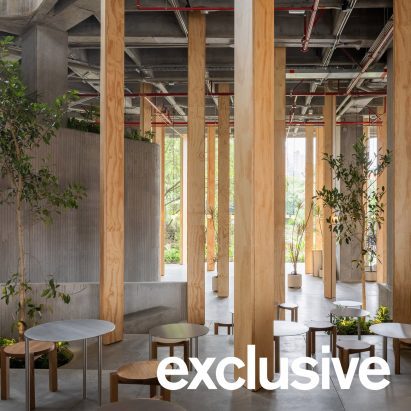
Studio Cadena filled the Masa cafe in Medellín with 31 towering wooden columns.
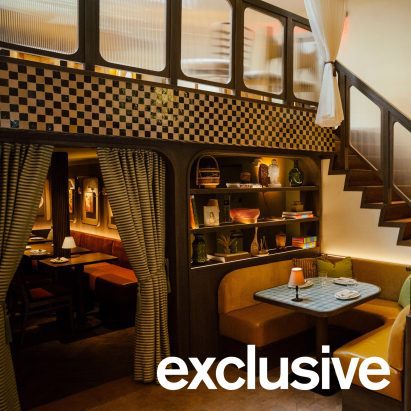
This approach reflects a quiet but pervasive shift across diverse projects, from Badweather’s mobile bathhouse Soak to Surrane Design’s Hommali restaurant. These endeavors illustrate a deliberate move towards creating contained, sensory-rich environments where the interaction between specific materials and modulated space defines the experience. It is a focus on tactile engagement and the choreography of human flow within tightly conceived boundaries, often reinterpreting existing structures or constrained sites.
The Masa cafe provides a clear illustration of this trend. Studio Cadena deployed over 30 plywood columns, stretching from floor to concrete ceiling, to craft an “atmosphere without walls or enclosure.” Mainstream industry discourse often prioritizes rare or expensive materials as markers of luxury, yet here, a ubiquitous, unassuming material like plywood creates profound spatial tension and tactile complexity. The columns do not merely decorate; they perform as spatial organizers, guiding circulation and defining intimate zones without solid partitions. This contradicts the conventional wisdom that spatial definition must come from hard boundaries or that luxury inheres in material cost. Instead, luxury manifests in the deliberate shaping of perception and movement, turning a simple material into a sophisticated spatial device.
This material-led spatial sculpting signals a recalibration of value. It suggests that the depth of a sensory encounter, rather than the intrinsic market price of components, will become the definitive measure of a project’s success. Designers are learning to extract maximum experiential impact from understated or even repurposed elements. By mid-2027, the industry will witness a distinct rise in projects where the primary investment is in the innovative application of common materials to achieve unique spatial and tactile narratives, rather than in their inherent exclusivity.
This emphasis on bespoke, tactile environments faces resistance from the prevailing forces of large-scale commercial development, where standardized material palettes and efficient, often generic, spatial layouts remain the default. Developers frequently prioritize cost-effective, high-volume solutions that bypass the nuanced material exploration seen in projects like Ivy Studio’s Fauna clinic, which meticulously transformed a 1970s brutalist bank into a soothing veterinary space. The pressure to deliver projects quickly and economically often precludes the deep material and spatial experimentation that defines this emerging sensibility.
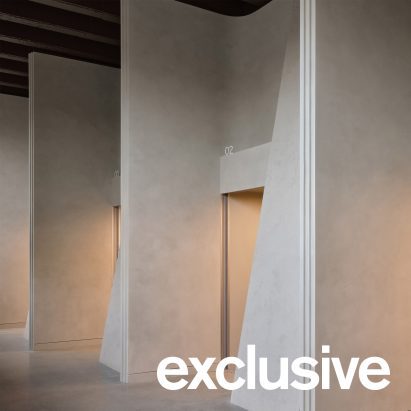
Interior professionals must conduct a “material-sensory audit” for their upcoming projects. This involves evaluating every chosen material not only for its visual appeal and durability but specifically for its haptic qualities, how it sounds when touched or walked upon, how it modulates light, and how its temperature shifts over the day. Consider placing contrasting textures adjacent to each other to create unexpected spatial markers and transitions. This exercise moves beyond mere specification to a richer understanding of how materials directly contribute to the felt experience of a space, as demonstrated by Merckx-Holvoet Architecten’s use of sandy tones in the V Penthouse to evoke the North Sea coast.
TL;DR
Thoughtful material application creates distinct spatial experiences, redefining luxury beyond expense.
Curated References


About this editorial — This piece was developed using AI-assisted research and curation across multiple industry sources. All analysis, opinions, and predictions represent the editorial perspective of JHDD. Sources are linked in the references section above.