JHDD Interior Report — 2026.09.08
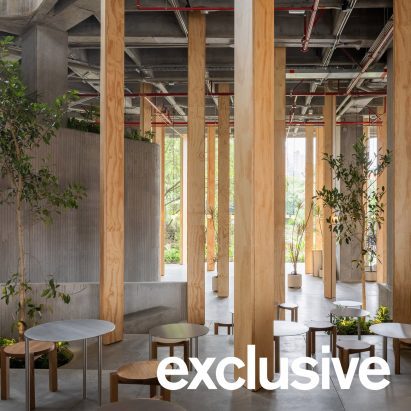
Studio Cadena filled the Masa cafe in Medellín with 31 towering wooden columns, creating an atmosphere described as “without walls or enclosure.” This specific approach to spatial definition, eschewing hard barriers for implied boundaries, resonates across several recent projects. From Badweather’s mobile bathhouse, Soak, on a London canal boat operating off-grid, to Surrane Design’s Hommali restaurant in New York which channels a traditional Thai house, there is a distinct pattern emerging. Designers are moving away from universal gestures, instead focusing on deeply specific, almost elemental experiences tied to geographic or cultural anchors, enriching both materiality and human flow.
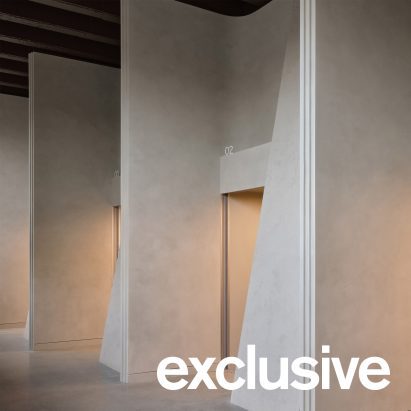
Consider Merckx-Holvoet Architecten’s V Penthouse in Duinbergen, which draws directly from the “sandy tones of Belgium’s North Sea shore,” seeking an interior that “envelops.” Mainstream luxury design often champions sleek, polished surfaces and a detached, aspirational aesthetic, frequently stripping spaces of their regional identity in favor of an internationalized sheen. This approach, however, fundamentally misunderstands the evolving definition of true opulence. The actual luxury clients seek now resides in an authentic connection to place and a grounded sense of belonging, rather than a generic display of wealth. The soft, textured materiality and the deliberate evocation of the local landscape in the V Penthouse create a profound tactile quality, inviting occupants to truly settle into their environment.
This deep contextualization provides a much richer spatial tension than mere aesthetic novelty. It forces a dialogue between the interior and its external environment, between the occupant and the embedded narrative of the materials. Where many designers might default to introducing “smart home” technology as a marker of sophistication, the real intelligence in projects like Merckx-Holvoet’s lies in their subtle orchestration of light, texture, and color to evoke a distinct mood and memory. This shift suggests that by late 2027, the most sought-after luxury residences will prioritize a meticulously curated sense of indigenous belonging over anonymous opulence, driving a resurgence in highly localized material sourcing and artisanal techniques.
This trajectory faces resistance from commercial developers and product manufacturers who prioritize scalable solutions and readily available, often synthetic, materials. Their business models rely on standardized finishes and quick project turnover, which inherently clash with the bespoke, time-intensive processes of deep contextualization and artisanal integration. The pressure to economize and standardize often defaults to surface-level aesthetics, missing the deeper experiential qualities these projects demonstrate.
Interior professionals should immediately conduct a “material narrative” audit for their next project. Instead of beginning with a mood board of trending palettes, start by exploring the immediate geographic or cultural context of the site. Identify one underutilized local material or artisanal technique, and then work to integrate it in a way that contributes to the tactile quality and human flow, rather than as a mere decorative accent. This means collaborating with local craftspeople and understanding supply chains that might not be immediately visible in mainstream distribution channels.
TL;DR
Authentic luxury now stems from deep contextual materiality and spatial narratives, not generic opulence.
Curated References


About this editorial — This piece was developed using AI-assisted research and curation across multiple industry sources. All analysis, opinions, and predictions represent the editorial perspective of JHDD. Sources are linked in the references section above.