JHDD Interior Report — 2026.09.02
H3O architects introduced hidden windows into Casa Plató, a 19th-century Barcelona house.
This detail, alongside others like Lauri Design Studio’s “mosh pit” lounge in Michigan’s Willow Point and IA’s integration of Craftsman detailing with minimalist tech for Notion, points to a deliberate cultivation of spatial and material friction. Designers are actively seeking incongruity, layering distinct aesthetic narratives within a single envelope. This is not about harmonizing disparate elements, but about maintaining their individual voices to generate specific, intentional tension.
Astet Studio’s design for Aethos London Shoreditch offers a clear illustration of this trend. Their “East meets East” approach, blending the Ron Arad Associates building’s industrial language with Japanese-inspired softness, foregrounds material and historical friction rather than attempting a seamless integration. Many design industry narratives still champion a respectful, often muted, contextual response in adaptive reuse projects, emphasizing visual coherence and historical deference. This conventional wisdom misses the point. True spatial richness now arises from the deliberate orchestration of dissonance, allowing the original structure’s materiality to collide with a new design language in a way that produces palpable energy. This creates specific spatial tension, affecting how occupants perceive and move through the environment. The tactile experience becomes layered, inviting engagement with conflicting material narratives simultaneously, pushing against expectations of uniform comfort or consistent texture.
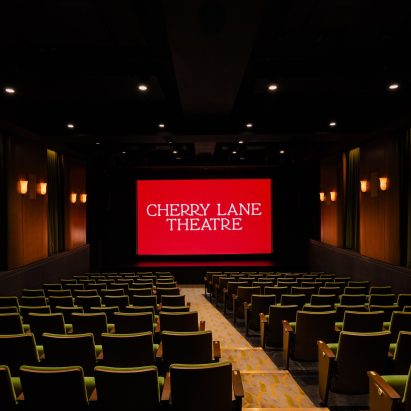
The perceived respect for a building’s past is often better served by a bold, counterpoint intervention that highlights, rather than homogenizes, its unique character. Leroy Street Studio’s overhaul of the historic Cherry Lane Theatre for A24, while maintaining its name and status, likely benefits from this same friction, creating a refreshed relevance without erasing the past. Such an approach can invigorate human flow, encouraging occupants to pause and examine the points of material conflict. By early 2028, the luxury residential and hospitality sectors will increasingly move away from subtle contextual integration, embracing overtly expressed material and historical friction to create distinctive spatial identities. This shift seeks to differentiate through narratives of palpable tension, prioritizing dynamic contrasts in tactile quality and the resulting human flow over smooth, predictable transitions that can lead to experiential flatness.
The primary resistance to this design approach comes from the commercial real estate development model itself. Its emphasis on rapid scalability, broad market appeal, and value engineering often steers projects toward safe, standardized material palettes and aesthetic conformity. This economic imperative prioritizes easily digestible visuals and quick tenant turnover, often suppressing the more nuanced, high-tension design choices that define truly memorable and spatially rich environments.
Interior professionals should immediately begin to compile mood boards and material libraries that juxtapose elements with radically conflicting tactile qualities, historical provenance, or perceived function. For instance, pair a coarsely hewn stone block with a laser-cut, ultra-smooth acrylic panel, or a richly embroidered, handcrafted textile with a stark, factory-finished metal sheet. Explore how these combinations generate unexpected spatial tension and influence potential human flow patterns, rather than merely visual contrast, in preliminary conceptual models for upcoming projects this week. Document the specific emotional and sensory responses these friction points evoke, pushing beyond superficial “contrast” to create genuine spatial and material dialogue within a space.
TL;DR
Intentional material and spatial friction offers more compelling human experiences than seamless integration.
Curated References


About this editorial — This piece was developed using AI-assisted research and curation across multiple industry sources. All analysis, opinions, and predictions represent the editorial perspective of JHDD. Sources are linked in the references section above.