JHDD Architecture Report — 2026.08.30
The Oscar Escuder Arquitectura rehabilitation of the Orrios Exchange building in Teruel meticulously respects its Renaissance loggia and masonry arches.
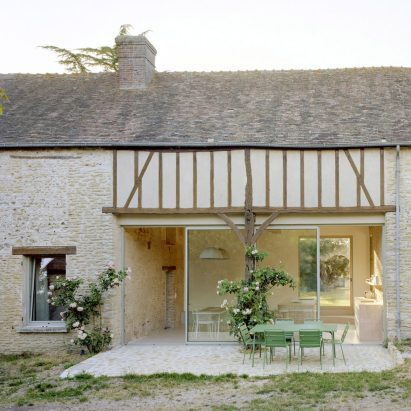
This project, alongside the modern interventions in vernacular stone farmhouses and DKA’s transformation of a historic Roman apartment, reveals a critical pattern. Architects are increasingly grappling with how to integrate contemporary programmatic needs and aspirations for natural connection into existing historical and material contexts. This is not simply about aesthetic updates, but a profound re-evaluation of structural philosophy, urban responsibility, and material integrity within an already built world.
The legacy of Cuba’s Microbrigadas Housing Program offers a powerful counter-narrative to conventional development strategies. This system, which mobilized ordinary workers for collective self-construction, reshaped entire districts of Havana, demonstrating a radical approach to urban densification and housing provision. Mainstream industry opinion often dismisses such models as relics of a particular political system or as inefficient, preferring market-driven solutions and highly specialized labor. However, this view overlooks the fundamental sustainability inherent in collective endeavor and the responsible allocation of state-backed technical knowledge for social good. True urban responsibility involves understanding how to leverage collective human capital and existing structures, rather than solely focusing on material specifications or individual building performance. The Microbrigadas prove that systemic housing challenges can be met through distributed, community-led construction, rather than monolithic projects from distant developers. By early 2029, urban planners and architectural practices will begin to formally integrate scaled-down, community-managed labor brigades into city-level housing initiatives across Southern Europe, acknowledging their economic and social resilience benefits.
The prevailing resistance to such community-driven models comes from large-scale construction conglomerates and financial institutions that prioritize singular, often decontextualized, capital-intensive projects. These entities frequently benefit from legislative frameworks that favor rapid, standardized development over bespoke, community-integrated processes, pushing a singular vision of urban growth that overlooks human scale.
An architecture professional should actively seek out community land trusts and cooperative housing initiatives, offering pro bono design consultation and advocating for policy reforms that decentralize construction funding. This means engaging directly with residents to co-design and facilitate skill-sharing, rather than waiting for developer-led contracts.
TL;DR
Sustainable architecture reclaims legacy structures and collective action, prioritizing community resilience over novelty.
Curated References

About this editorial — This piece was developed using AI-assisted research and curation across multiple industry sources. All analysis, opinions, and predictions represent the editorial perspective of JHDD. Sources are linked in the references section above.