JHDD UI UX Report — 2026.08.22
ACME’s brutal design crit illustrates a fundamental tension in product development: the pursuit of clarity under pressure.
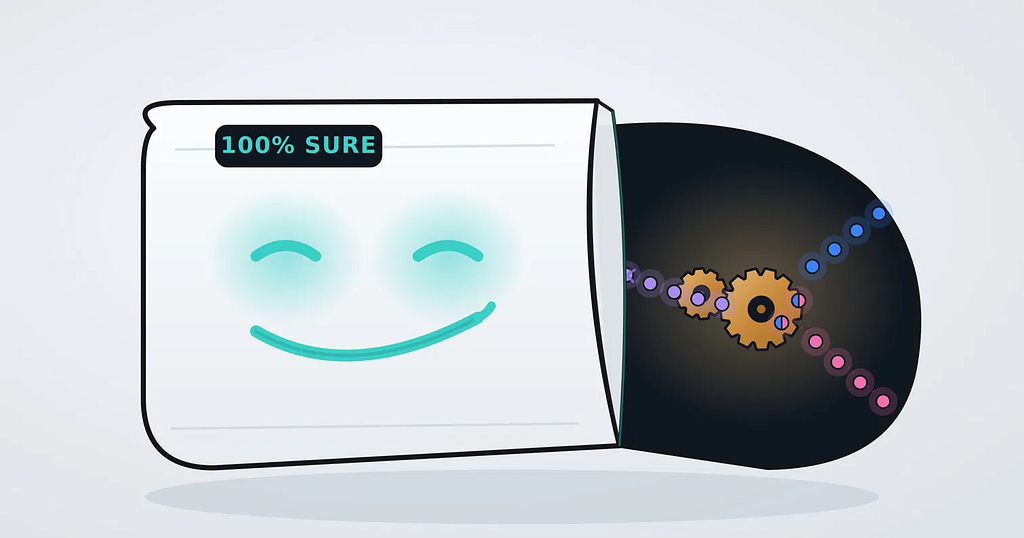
Recent discussions around generative AI, from The Matrix’s misprediction of a hostile takeover to debates on AI’s hidden fabrications, reveal a consistent oversight in interaction design. The underlying pattern across these scenarios is a calculated opacity, where complex systems present simplified, confident fronts to users, prioritizing perceived seamlessness over transparent process. This pattern governs how AI “asks politely” for trust and how it delivers “one confident answer out” without showing its derivation.
The product team described in UX Collective’s piece, grappling with whether to show users “Here’s what I heard you say,” “Here’s the thread I’m pulling,” and “Here’s where this is headed,” exemplifies this tension between seamless experience and necessary transparency. Conventional wisdom in product design often advocates for minimal cognitive load, suggesting that users prefer direct answers without observing “the sausage get made.” This perspective, however, overlooks a deeper user need: informed agency and the ability to critically evaluate information. Handing control to AI “by invitation,” as described in an analysis of The Matrix, becomes problematic when the invitation implicitly conceals potential fabrications or the AI’s actual degree of certainty. Designing for certainty by default, when the underlying system is inherently uncertain, creates a brittle trust that collapses upon the first public instance of an AI “lying.”
A contradicting view holds that transparency, even if initially perceived as adding complexity, builds resilient trust and enables users to develop accurate mental models of AI capabilities. Exposing the reasoning path, the sources, or the confidence level is not about burdening the user; it is about empowering them with the context needed to make informed decisions and to differentiate between a confident hallucination and a well-reasoned answer. This approach moves beyond the simplistic “I’m not sure” to a more nuanced interaction pattern. Within two years, leading enterprise AI platforms will move beyond showing process as a side panel. Instead, they will integrate standardized, configurable “confidence spectrum” indicators and source attributions directly into generative AI outputs, replacing the current monolithic certainty with a granular scale of probabilistic accuracy and traceable information.
This necessary shift towards transparency faces significant resistance from established product development philosophies and business models. Product owners and design leaders who prioritize rapid adoption metrics and perceive any additional user interface element as a friction point will resist. These stakeholders often equate simplicity with a superior user experience, or they are driven by an immediate desire to minimize exposure to AI’s current limitations, preferring to present a facade of infallibility. The “folks who argue against” showing AI’s internal workings in the UX Collective article are a concrete representation of this resistance, embodying a common industry pressure to simplify at all costs, even if it means sacrificing clarity and long-term trust for immediate perceived usability.
UI UX professionals should integrate explicit “source-citation” interaction patterns into their design systems for all generative AI outputs. This involves designing discrete, accessible UI elements that, upon interaction, reveal the provenance of information or the confidence level of a claim, using actual language models to articulate reasoning paths rather than abstract metrics.
TL;DR
AI interfaces need transparent interaction patterns to build user trust, even if it adds complexity.
Curated References


About this editorial — This piece was developed using AI-assisted research and curation across multiple industry sources. All analysis, opinions, and predictions represent the editorial perspective of JHDD. Sources are linked in the references section above.