JHDD Architecture Report — 2026.08.21
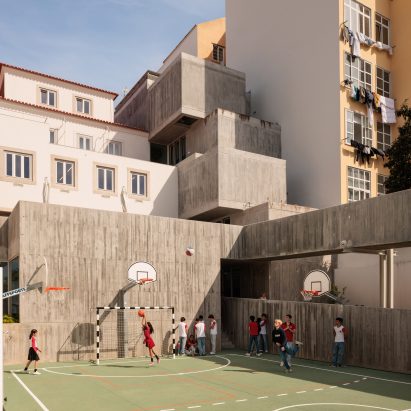
The concrete extension by António Costa Lima Arquitectos to the historic Colégio de Santa Maria in Lisbon demonstrates a persistent architectural impulse towards visible declaration.
Across diverse reports—from new additions to existing structures to novel biological interventions—a subtle but pervasive shift is detectable: design is increasingly tasked with embedding itself within pre-existing systems. This involves not just contextual sensitivity, but a fundamental reconsideration of how new elements interact at a systemic level, whether with a historic building, a natural ecosystem, or a human-machine interface, aiming for adaptive integration rather than overt assertion.
Conventional wisdom often celebrates additions like António Costa Lima Arquitectos’ stack of cubic concrete volumes for their contrasting materiality or the dialogue they establish with the original structure. Such an approach, while often well-executed, frequently prioritizes the architectural object as a distinct entity, even when aiming for harmony. A more critical view suggests this still represents an imposition of form and material onto an established context, rather than a genuine evolution of its inherent systems. True urban responsibility in such scenarios would involve interventions that are less about formal statements and more about augmenting existing processes or functions without necessitating substantial new material volume. The emphasis should move from what is added to how it adapts. By late 2027, the industry will see a decline in the explicit separation between old and new material systems, favoring instead advanced composites that integrate seamlessly at a molecular level, or designs that operate primarily through environmental feedback loops.
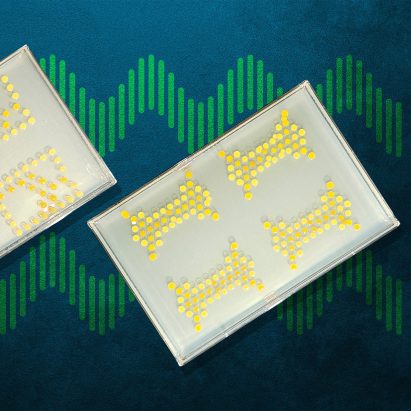
Consider the work documented by KIP arhitekti with the Underground Spa, where architecture is buried to preserve a rustic aesthetic. This act, while deferential to visual context, still relies on significant excavation and the introduction of new subterranean structures. The true frontier lies in interventions that operate with the subtlety of the MIT researchers’ engineered bacteria, programming plants for self-defense without visible alteration. This indicates a future where architectural components, particularly in urban regeneration, function as intelligent, adaptive systems, responding dynamically to environmental conditions rather than static forms. Such structural philosophy suggests that the highest form of material innovation will be invisibility and inherent responsiveness.
This systemic integration, however, faces significant resistance from the entrenched economics of signature design and the celebration of the architect as a singular artistic author. The excitement generated by Brad Pitt joining the Peter Zumthor documentary highlights how much the industry still gravitates towards the personality and the discernible “masterpiece.” This focus perpetuates a market demand for iconic, often object-oriented, structures that stand apart, thereby disincentivizing the quieter, more integrated, and process-driven design solutions that truly embody urban responsibility and material honesty.
A working architecture professional should immediately begin investigating and specifying material systems that are inherently adaptable and regenerative, prioritizing those with embedded sensory and responsive capabilities. This means moving beyond static specifications to explore computational materials, bio-integrated components, and advanced composites designed for iterative adaptation and minimal external energy input.
TL;DR
Architecture must evolve from creating distinct objects to designing integrated, adaptive systems within existing contexts.
Curated References

About this editorial — This piece was developed using AI-assisted research and curation across multiple industry sources. All analysis, opinions, and predictions represent the editorial perspective of JHDD. Sources are linked in the references section above.