JHDD Interior Report — 2026.08.17
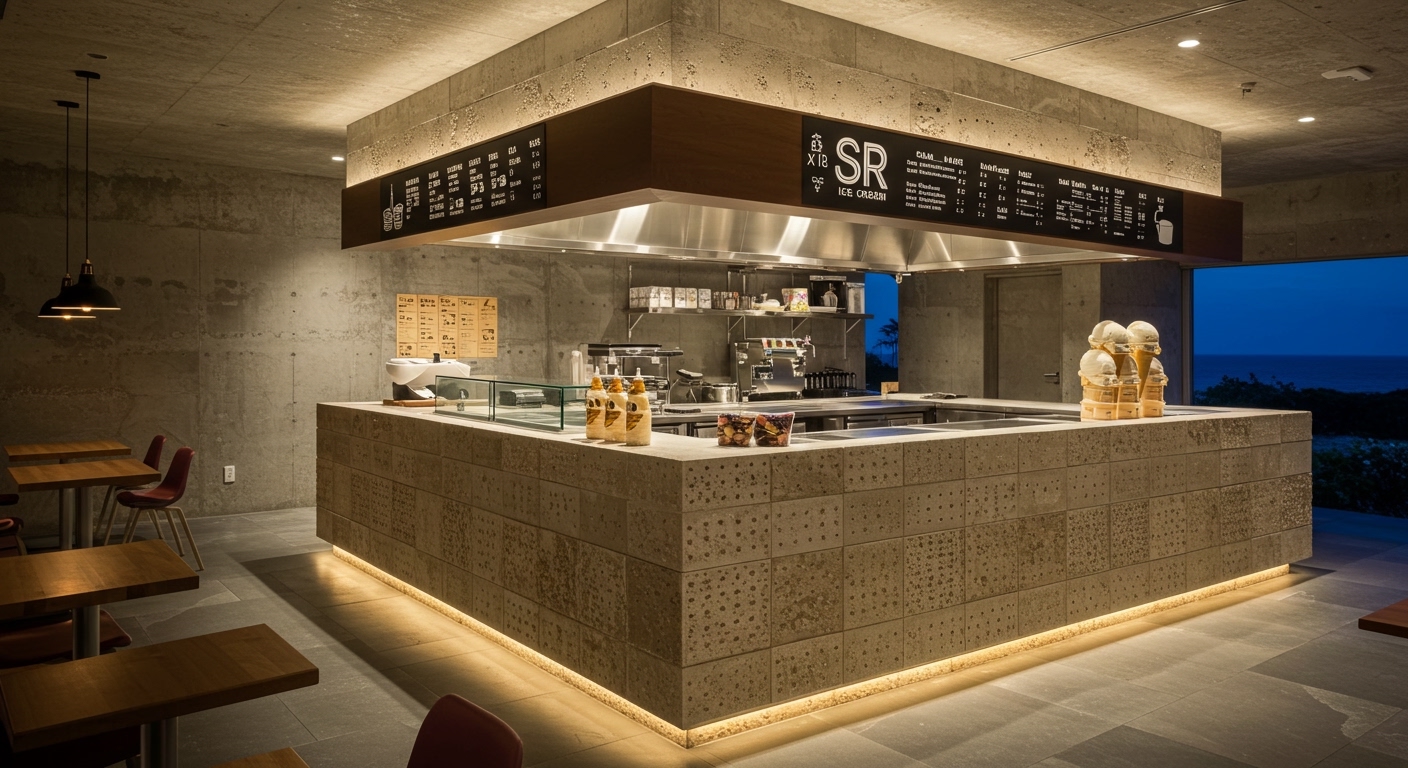
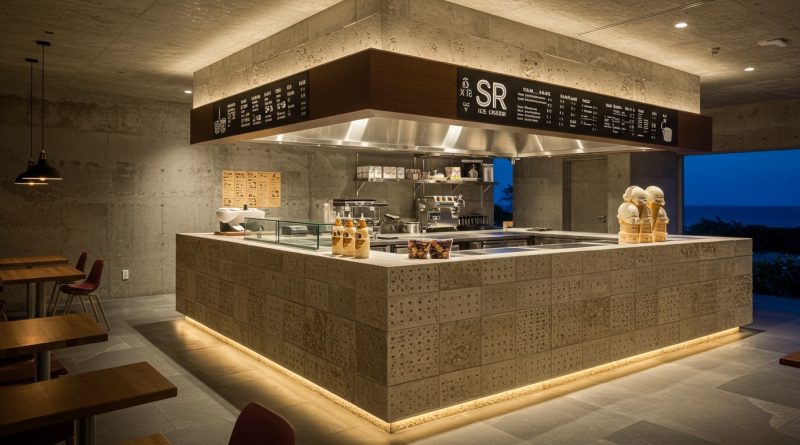
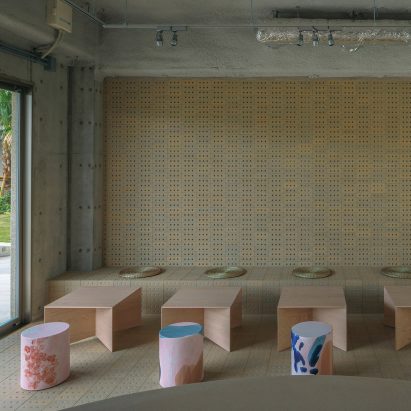
Kii’s SR Ice Cream Miyakojima features a counter crafted from local limestone and perforated concrete tiles, anchoring a transient sensory experience.
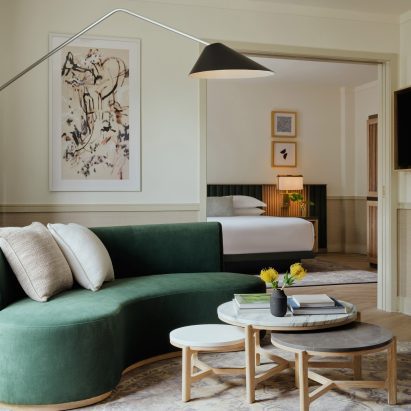
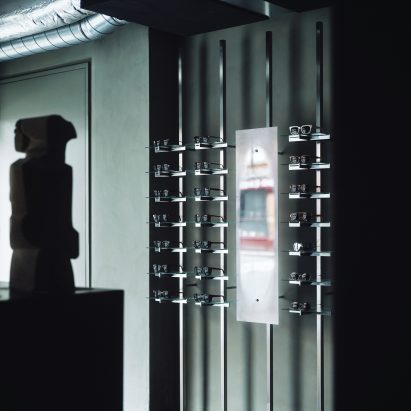
This approach, where designers anchor fleeting human experiences with distinct material and spatial narratives, unites diverse projects across recent reports. From Youth avoiding obvious Manchester motifs for the Cubitts eyewear store, to Busta Studio making the Kimpton Ashbel hotel feel like a curated residence, a critical shift is underway. Designers are deploying precise material choices and carefully orchestrated spatial tensions to craft physical environments that demand deeper engagement, rather than simply presenting visually appealing surfaces.
The work by Kii in Miyakojima exemplifies this. The application of local limestone does more than merely connect the ice cream shop to its geographic origins; it introduces a foundational weight and texture that grounds the otherwise light and temporary act of consuming ice cream. The perforated concrete tiles further modulate light and sound, creating a specific microclimate of cool respite and subtle tactile interest. This focus on locally derived materials, often championed for sustainability or provenance narratives, serves a more fundamental purpose: it provides a physical anchor for human flow and interaction. The conventional wisdom often prioritizes materials for their visual trends or branding potential. However, the true value emerging here lies in how these materials intrinsically contribute to thermal regulation, acoustic dampening, and haptic feedback, creating a complete spatial envelope that registers on multiple sensory levels.
The intention is not merely to tell a story about a place, but to allow the place to physically resonate within the occupant through its inherent materiality and how it frames activity. This method, seen also in Ome Dezin’s integration of iconic furniture by designers like Frank Gehry into a 1990s Los Angeles residence amidst a mature forest, prioritizes authentic spatial depth over superficial aesthetic statements. Expect a significant surge within the next two years in commissions explicitly requiring material palettes that demand direct physical engagement, prioritizing weight, temperature, and specific acoustic dampening over visual novelty. These commissions will seek environments that can be felt as much as they are seen.
This deliberate cultivation of deep, localized materiality and spatial tension stands in opposition to the pervasive commercial pressure for generic, instantly reproducible, and globally scalable designs. The resistance comes from entities that prioritize immediate visual impact and “shareability” on digital platforms over the nuanced, physical experience of being in a space. They view material authenticity and specific spatial narratives as cumbersome rather than valuable.
Interior professionals should, this week, analyze a recent project through the lens of its non-visual sensory contributions. Specifically, identify how chosen materials contribute to the ambient temperature, the quality of light reflection, the absorption or reflection of sound, and the direct haptic experience of touch, rather than just their visual finish or brand origin.
TL;DR
Material specificity and spatial tension are becoming primary drivers for designing deeply engaging, contextually grounded environments.
Curated References

About this editorial — This piece was developed using AI-assisted research and curation across multiple industry sources. All analysis, opinions, and predictions represent the editorial perspective of JHDD. Sources are linked in the references section above.