
JHDD Web Design Report — 2026.07.28
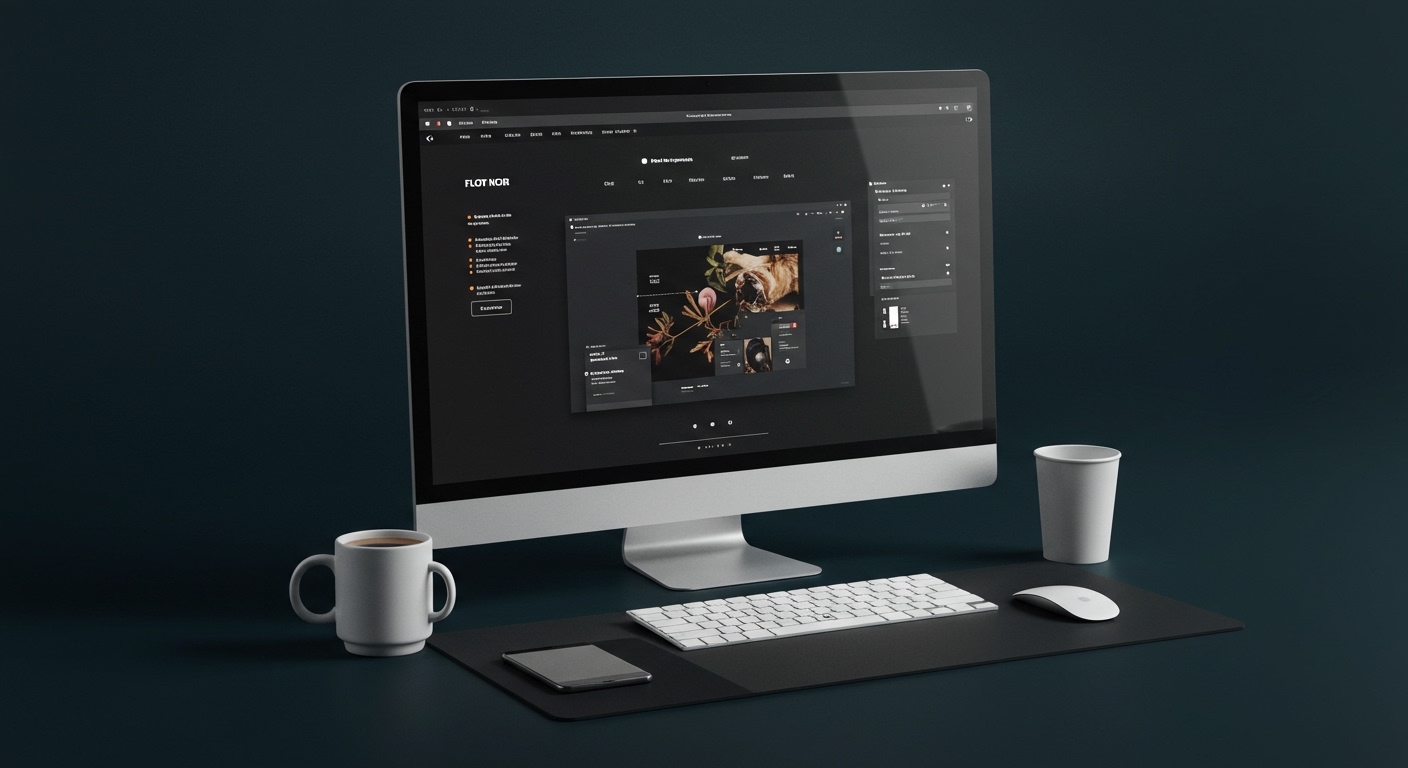
FLOT NOIR’s reimagining of MERSI’s website underscores a deliberate shift towards interactive fidelity built on precise motion and editorial storytelling.
This trend of meticulously crafted digital experiences, evident across projects like Cerebrium and Ridgeline, reveals an industry quietly investing in deep front-end craft. These are not merely visually striking websites; they are engineering feats that integrate complex 3D rendering, sophisticated animation, and architectural decision-making directly into the content delivery. The common thread is a focused effort to translate intricate concepts and brand narratives into immersive, performant interactive journeys, rather than relying on templated interactions or generalized UI patterns. This movement re-emphasizes the art of execution, where design intelligence meets rigorous front-end engineering to create distinctive digital spaces.

Garden Eight’s approach, crafting websites designed to evolve, engage, and endure, presents a direct counterpoint to common industry practices. Mainstream web development frequently prioritizes immediate gratification through rapid iteration and short-lived UI trends, often leading to a perception of disposability. This short-sightedness manifests as a constant push for redesigns every few years, rather than an investment in thoughtful architecture and design systems that can adapt. Garden Eight’s method suggests that deeper value lies in a foundational integrity, where components and experiences are built to be robustly maintainable and adaptable through considered craft, enabling a sustained, evolving presence without needing complete overhauls. This directly challenges the economic model driven by perpetual reinvention and superficial refresh cycles.
The engineering behind Ridgeline’s real-time 3D experience in Webflow highlights a maturing sophistication in web graphics capabilities. The detailed attention to architectural decisions, efficient terrain rendering, and specific performance optimizations moves beyond mere aesthetic embellishment. It signals a capability to deliver highly interactive, cinematic experiences without the traditional performance trade-offs commonly associated with WebGL. This stands in opposition to the prevailing belief that complex graphical interactions inherently hinder accessibility or load times. It is an opinion that many frameworks, while simplifying development, simultaneously obscure critical rendering details necessary for such performance. By late 2027, the demand for specialists in performant web graphics and custom shader development will significantly outstrip generalist front-end roles, leading to a visible stratification of design agencies based on their deep rendering craft capabilities.
This dedication to high-fidelity, performance-optimized interactive craft encounters significant friction from standard business models and prevailing development methodologies. The industry’s lean towards component-driven, framework-heavy approaches, while boosting development speed, often introduces layers of abstraction that mask crucial performance considerations. Developers frequently inherit large, opinionated libraries rather than scrutinizing individual asset pipelines or rendering costs. Furthermore, client budgets, often constrained by perceived ROI for ‘standard’ features, rarely allocate sufficient resources for the specialized skill sets and meticulous optimization required to achieve experiences like Cerebrium or Dash Creative. The immediate cost of bespoke engineering is often weighed against the long-term gains of a truly unique, performant brand experience, frequently leading to compromises and less ambitious outcomes.
Web design professionals should dedicate specific time this week to understanding the underlying rendering pipeline of their chosen animation or 3D library, examining how performance optimizations for Ridgeline or Cerebrium were achieved. Focus on critical path rendering, asset compression tailored to specific browser engines, and judicious use of WebGL contexts. This means moving beyond simply invoking library functions and instead profiling GPU activity and optimizing shader performance to achieve truly high-fidelity, performant interactive experiences.
TL;DR
High-fidelity web experiences demand deep technical craft in rendering and motion, challenging industry norms of rapid, superficial deployment.
Curated References
About this editorial — This piece was developed using AI-assisted research and curation across multiple industry sources. All analysis, opinions, and predictions represent the editorial perspective of JHDD. Sources are linked in the references section above.