JHDD Architecture Report — 2026.09.13
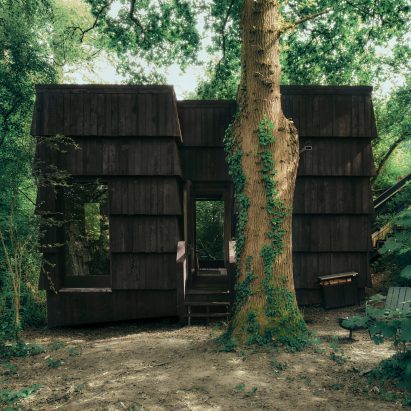
Built Works’ Bather’s Cabin in East Sussex is clad in blackened larch and features a planted rooftop terrace devoted to a specific ritual.
These recent developments reveal a shifting focus within the built environment, moving beyond aesthetic form-making to scrutinize the foundational processes of construction, material lifecycles, and the agency of those involved in building. This involves a critical reassessment of urban responsibility, the value of existing structures, and the very philosophy underpinning how structures are conceived and executed. The pattern emerging is a demand for integration of process with product, and a deep engagement with physical context.
The historical model often attributed to Filippo Brunelleschi, where architectural drawing asserted authority over the construction site, reducing it to a place of execution rather than invention, is increasingly problematic. The legacy of USINA and collective construction in Brazil directly contradicts this conventional view. Their approach highlights a structural philosophy that embeds invention and decision-making within the building process itself, fostering urban responsibility through participatory methods. This stands in stark contrast to the mainstream industry’s reliance on singular authorship and top-down project delivery, which often marginalizes skilled labor and overlooks the social impact of construction practices. A building’s structural integrity is not only about its physics but also about the integrity of its making.
Material innovation must extend beyond the creation of novel compounds to encompass intelligent reuse and adaptation of existing resources. Gut Deubelbeiss Nill Architekten’s careful renovation of the Bramberg Residence, preserving its original 1920/21 character while adapting it for modern requirements, exemplifies this. The conventional industry drive for “disruption,” often seen in product design like Dyson’s CameraJet, frequently implies replacement as the primary form of progress. In architecture, this translates to prioritizing new construction over the more complex, yet ultimately more sustainable, work of preservation and sensitive adaptation. This mainstream bias contributes significantly to embodied carbon emissions and discards valuable existing urban fabric. A clear shift is observable, and by late 2027, major urban development policies will mandate detailed material passports for all new and significant renovation projects in European capitals, incentivizing circular economy practices.
The primary opposing force to this integrated, responsible approach is the entrenched financial and regulatory framework governing real estate development. This system frequently incentivizes rapid new construction, simplified supply chains, and projects with predictable, often short-term, return on investment. These forces concrete the separation between design intent and construction reality, fostering a de-skilled workforce and discouraging nuanced, materially honest solutions.
A working Architecture professional can immediately begin advocating for and implementing material audits on every project, regardless of scale. This involves documenting existing components, researching local salvage and recycling streams, and designing details that facilitate future disassembly and reuse, actively engaging with fabricators and craftspeople at the earliest stages of a project.
TL;DR
Architecture’s future depends on integrating material honesty, collective construction processes, and deep respect for existing urban fabric.
Curated References

About this editorial — This piece was developed using AI-assisted research and curation across multiple industry sources. All analysis, opinions, and predictions represent the editorial perspective of JHDD. Sources are linked in the references section above.