JHDD Architecture Report — 2026.10.08
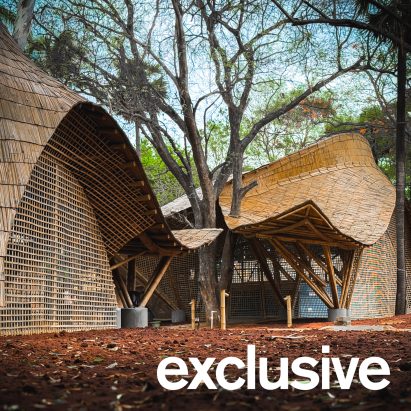
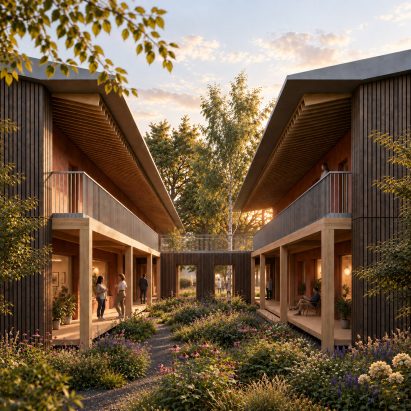
The Maestro Ilaiyaraaja Centre for Music Learning and Research employs dramatic bamboo vaults for teaching and research spaces on the IIT Madras campus. This project, alongside the Office for Future’s plans to transform a former school in Stavyshche into housing for displaced families, and IKEA’s new UK and Ireland marketplace for pre-owned furniture, reveals a common underlying pattern often overlooked by singular media reports. This pattern is a design philosophy recognizing inherent value and latent potential within existing structures, materials, or objects, prioritizing ingenuity over novelty.
The prevailing industry conversation around sustainability often centers on material substitution or certification protocols for new construction. It frequently frames “green” materials as alternatives to traditional choices. However, Ekarth Studio’s completion of the Maestro Ilaiyaraaja Centre demonstrates a deeper structural philosophy. The project utilizes bamboo as a primary structural element where its material properties, like high tensile strength-to-weight ratio and rapid renewability, are celebrated and leveraged to create complex, honest forms. Mainstream architectural practice often defaults to steel or concrete due to codified standards and perceived ease of procurement, viewing bio-based materials like bamboo as a niche or decorative choice. This perspective misses bamboo’s inherent structural capacity, which, when properly engineered, can surpass conventional materials in performance and embody genuine material honesty.
The industry’s conventional wisdom prioritizes a linear economy, where materials are extracted, manufactured, used, and discarded, with recycling often an afterthought. This contrasts sharply with projects like the Dvir housing, which repurposes an entire building, or the Find Attached exhibition, which champions designs like a folding sink and a room divider that provides natural air conditioning, maximizing utility from minimal resources. These initiatives are about designing with an understanding of a material’s full lifecycle and its capacity for transformation. By late 2028, it is expected that national building codes in several equatorial regions will feature expanded, performance-based specifications for engineered bamboo products, enabling their wider adoption in multi-story residential and institutional structures, moving beyond purely aesthetic or singular application.
The dominant force resisting this necessary shift towards intrinsic material value and structural ingenuity is the entrenched ecosystem of conventional material manufacturing and its associated regulatory frameworks. Global supply chains are optimized for the production and distribution of high-carbon materials, and established engineering practices often default to these familiar solutions. This inertia makes it challenging to introduce innovative structural applications for rapidly renewable materials or to prioritize adaptive reuse when new construction is often perceived as a simpler, more profitable venture.
Architecture professionals should schedule a mandatory ‘material ingenuity’ session with their structural engineers and contractors at the pre-design phase of every project. This session should actively explore all options for adaptive reuse of existing site elements or structures, and critically evaluate rapidly renewable or reclaimed materials for primary structural and enclosure systems, rather than treating them as secondary aesthetic choices.
TL;DR
The future of design lies in recognizing and leveraging the inherent value and structural honesty of existing or rapidly renewable resources.
Curated References


About this editorial — This piece was developed using AI-assisted research and curation across multiple industry sources. All analysis, opinions, and predictions represent the editorial perspective of JHDD. Sources are linked in the references section above.