JHDD Architecture Report — 2026.09.30
The Knekt floor lamp by Hegren features local production and design for repairability.
These stories collectively reveal a tension between immediate programmatic demands and a deeper commitment to enduring material integrity and contextual rootedness. They show a fragmented approach to integrating sustainability and longevity into design processes, ranging from product-level details to large-scale urban interventions. The emphasis is often on the immediate deliverable rather than the holistic lifecycle or the embedded history.
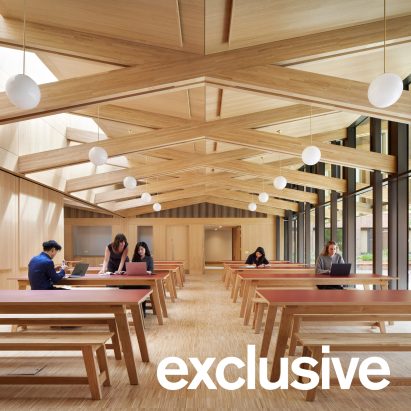
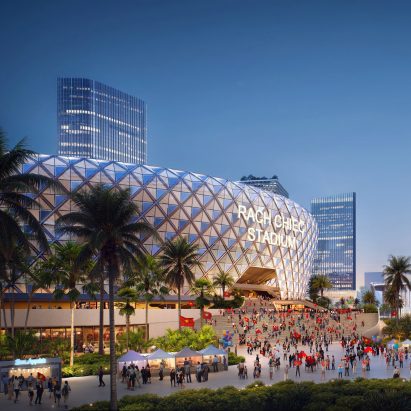
Stanton Williams designed new gabled brick boarding houses for Winchester College, referencing its 640-year-old historic layout. This approach signals an architectural philosophy rooted in continuity and material integration. The buildings are designed to support a specific culture within a centuries-old institution, prioritizing contextual sensitivity and material dialogue with the existing fabric. A conventional industry view might celebrate the rapid construction and economic impact of projects like the 70,000-seat Rach Chiec Stadium by Populous on the outskirts of Ho Chi Minh City, focusing on its capacity and national symbolism. However, this view overlooks the deeper urban responsibility required for such large-scale interventions. Building significant infrastructure on city peripheries without robust, long-term urban integration strategies risks creating isolated monuments rather than genuinely sustainable civic assets. True urban responsibility demands a structural philosophy that considers material lifecycle and community integration from inception, not just project completion. By mid-2028, cities will increasingly mandate long-term urban impact assessments for all infrastructure projects, moving beyond immediate functional metrics.
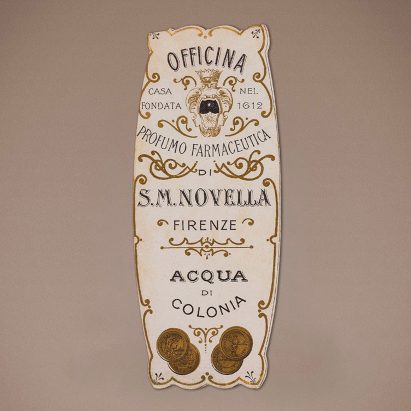
The appointment of Formafantasma as creative directors for Officina Profumo-Farmaceutica di Santa Maria Novella, an 800-year-old apothecary, highlights a different kind of material innovation: one that unearths hidden histories to inform new launches. This method prioritizes cultural sustainability and deep material narratives over superficial novelty. Skuli Mogensen’s “The Temple,” an outdoor sculpture built from exposed architectural concrete, similarly champions material honesty through its direct engagement with structural expression, though at a different scale and context. Mainstream opinion often equates material innovation with developing entirely new composites or high-tech solutions, overlooking the profound value of understanding and repurposing existing material knowledge and cultural legacies. The emphasis on newness frequently leads to materials with unproven longevity or complex recycling challenges. Instead, a more responsible path lies in a structural philosophy that treats material not just as a component, but as a carrier of time and tradition, as seen in Hegren’s focus on repairability for its Knekt lamp. This approach directly confronts planned obsolescence and excessive consumption. By early 2027, the design industry will recognize the financial and environmental benefits of lifecycle design, integrating modularity and repair as primary innovation drivers.
The immediate financial pressures and short-term investment cycles from developers and public funding bodies often resist these deeper, more time-intensive approaches to material and urban responsibility. Project timelines frequently prioritize speed and perceived cost-efficiency over the long-term gains of genuine material honesty and contextual integration, perpetuating a cycle of disposability.
Architecture professionals should initiate a material audit within their current projects, identifying at least one primary material that can be sourced locally and designed for repairability or circularity, moving beyond standard specifications and asking critical questions about embedded energy and end-of-life scenarios.
TL;DR
Design must prioritize material longevity and contextual integration over immediate programmatic demands and superficial innovation.
Curated References

About this editorial — This piece was developed using AI-assisted research and curation across multiple industry sources. All analysis, opinions, and predictions represent the editorial perspective of JHDD. Sources are linked in the references section above.